00:00:00 - 00:00:23
Speaker 1
In 1977, the Voyager One probe began its journey bearing messages to any lifeforms it may encounter in interstellar space. On board were two gold discs representing the sounds of Earth.
00:00:23 - 00:00:51
Speaker 1
Chuck Berry's Johnny B good joined other American roots music recordings, with the song cultivating the mythology of a guitar slinging hero emerging from the bayou country. Your New Orleans Afro American music had already circled the globe. Coming from sources in the Deep South with the blues becoming the common core of popular music, one cannot even begin to explain Elvis, LED Zeppelin, Elton John, the Rolling Stones, or even the Beatles without a deep dive into the blues.
00:00:51 - 00:00:59
Speaker 2
The blue is the mother of the roots of all music, blues and gospel. We've been living in the blues ever.
00:00:59 - 00:01:00
Speaker 3
Since Jelly Roll Morton published Jelly Roll.
00:01:00 - 00:01:04
Speaker 2
Blues.
00:01:04 - 00:01:30
Speaker 4
In. It is the music of hard working people that use the music to get through, and to also celebrate the fact that they have gotten through. There's so much joy to be had. People aren't sitting there crying and their drinks, they're dancing, they're moving, they're groovin, they're laughing. They're having a great time. That isn't straight up alcohol. That's the music.
00:01:30 - 00:01:38
Speaker 4
Whoa!
00:01:39 - 00:01:47
Speaker 1
Top musicians have reached for the blues over the last century. To build their skills and test their mettle.
00:01:47 - 00:02:02
Speaker 1
These stories finally get the blues it's due. They prime classic rock fans with tales touching upon music's biggest icons. Illuminate their common ground and tap into a modern revival of heartfelt American music.
00:02:02 - 00:02:27
Speaker 1
I'm Ric Stewart, a DJ, filmmaker and professor highlighting folklore from Hall of Fame and Grammy winning producers, musicians and writers, each taking the time to talk and play the blues. Since the early 70s, I've been on a quest to reverse engineer the classic rock, the blue everybody's mind. I put my hands deep in the fire, picking up a guitar, tracking down musical heroes and interviewing them while capturing exclusive videos.
00:02:27 - 00:02:49
Speaker 1
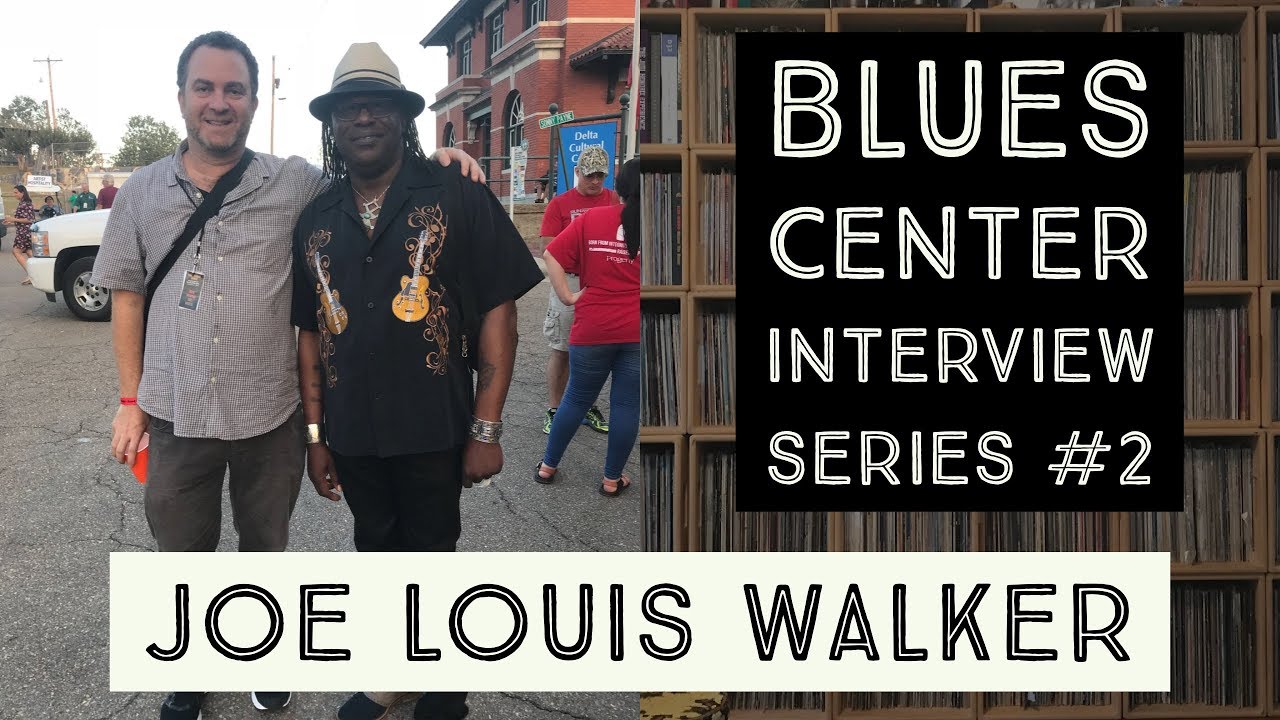
I wound up sitting on top of an inspirational treasure chest of music history that I felt compelled to share. In 2003. Joe Louis Walker said, Ric, you go save the blues, man. You're young enough. I didn't know what Joe meant then, but it later made sense to relate my findings. Most artists shared a passion for following their heroes into the craft of blues roots music.
00:02:49 - 00:02:52
Speaker 1
They measured up against.
00:02:52 - 00:02:59
Speaker 2
I feel like I'm a very, very small part of it, and I'm very proud to be a small part of it.
00:02:59 - 00:03:03
Speaker 1
Blues is still kind of shining through, and rock and roll and tree and R&B.
00:03:03 - 00:03:11
Speaker 5
A lot of people might not recognize it, but this is it. I mean, it's got to be this. That's the start.
00:03:11 - 00:03:29
Speaker 3
R&B, jazz, funk, community or whatever you want to call it. All the music is based around eight boy 12 or 16 boy blues. The labels that they stuck on, on players that was doing this long before there was a label. It was all called the Blues.
00:03:29 - 00:03:34
Speaker 1
This story concerns the top selling and touring acts of all time.
00:03:34 - 00:04:00
Speaker 1
At the apex of classic rock. Woodstock fans gathered expecting blues credibility from headliners who had spent years playing a blues or rhythm blues apprenticeship. Santana had led the Santana blues band The Who had begun with a maximum R&B sound. Sly and the family Stone melded gospel and R&B into pop. And Jimi Hendrix built his early reputation on the Chitlin Circuit.
00:04:00 - 00:04:04
Speaker 1
On Electric Ladyland. Hendrix tipped this kept circuit colleague Earl King with the cover of Come On!
00:04:05 - 00:04:07
Speaker 6
Part one.
00:04:07 - 00:04:31
Speaker 6
I don't like Jimi, but I didn't know who he was until I saw a picture on a funk album and somebody kept telling me, you zero. And you got Jimi Hendrix, that 20 songs. So to me. So it took us a minute. Jimi James. This guy's happy with the record and got a dog that's the iconic thing I like about Hendrix.
00:04:31 - 00:04:35
Speaker 6
No one ever touched the thing on it that Hendrix did.
00:04:35 - 00:04:42
Speaker 2
We listened to it and depths.
00:04:42 - 00:04:47
Speaker 1
Songwriter Tony Joe White supplied Elvis three songs, including "Polk Salad Annie"
00:04:47 - 00:04:48
Speaker 5
Any Other.
00:04:48 - 00:04:58
Speaker 6
Never got a chance to tell him, I Like the Boots, he wore.
00:04:58 - 00:05:07
Speaker 6
And the Faded Denim jacket bought from some Mississippi Stone.
00:05:08 - 00:05:31
Speaker 6
I met him in Memphis a couple times in a row of Stax studios, I got down there a few times. That was true. Me. Really good man. Soulful man. Not a real guitar player. He knew a few chords a he would try to get me to show him a few little blues-y licks and stuff. He'd forget them in 2 minutes probably.
00:05:31 - 00:05:39
Speaker 6
I'd show him anyway.
00:05:57 - 00:06:02
Speaker 1
When you started off your solo career, you had "Old Blue Car" that's blues related, right?
00:06:02 - 00:06:09
Speaker 8
Sure it is. I got a "New Old Blue Car"
00:06:09 - 00:06:29
Speaker 8
It's a heavenly blue. Must be centuries old. Blue. But that steering wheel is made of solid gold. You don't even want to know how much it cost, whatever it is. Well, no matter where you drive.
00:06:29 - 00:06:30
Speaker 7
It, you can't get.
00:06:30 - 00:06:43
Speaker 8
Lost. No matter where you drive, you can't get lost. So I played some of the great songs of blues, you know, different things I'll take as a musician. You know, I'm always trying to get in that groove.
00:06:43 - 00:07:08
Speaker 5
It afforded a relief from the blandness.. You know, very bland popular music. Now here comes something else. But, man, this has got a flavor to it. Like, had some really good tacos with some jalapenos. And in other words, it awakened dormant appetites.
00:07:08 - 00:07:11
Speaker 1
But in the British thing, why do you think they were so effective since they were kind of outsiders?
00:07:11 - 00:07:15
Speaker 9
Because they knew how to manipulate the blues
00:07:15 - 00:07:16
Speaker 1
I think.
00:07:16 - 00:07:33
Speaker 5
Being an English person, it's about study and how you go about your study, what you put in certain perspective. It's just a way of each territory taking something else and, designing for their own territory.
00:07:33 - 00:07:47
Speaker 1
As John Lennon put it, the rolling Stone magazine in 1970. "The blues is better because it's real. It's a chair, not a design for a chair. You sit on that music."
00:07:47 - 00:07:53
Speaker 1
Last time we did an interview was 21 years ago, and we talked about Specialty Records in New Orleans, which was our Art Rupe's operation.
00:07:53 - 00:08:22
Speaker 6
You know, once Fats Domino started to hit, he wanted to explore New Orleans. He held auditions in his studio. And at Cosmo, he was just about to pack up and go home. And this little guy comes in and tears in his eyes. Oh, please, mister, please listen to me. And it was Lloyd Price embodying this quality. And of course, that became a gigantic hit around the time that, Little Richard went religious and wanted to get out of the business.
00:08:22 - 00:08:28
Speaker 6
Didn't want to sing the devil's music anymore. Larry Williams came along. Who was Lloyd Price's chauffeur? I think they were cousins.
00:08:29 - 00:08:34
Ric Stewart
Then Larry Williams miraculously kind of becomes a force, and he comes with "Slow Down" and "Bad Boy"
00:08:34 - 00:08:35
Billy Vera
"Bonie Moronie"
00:08:35 - 00:08:40
Speaker 1
"Dizzy, Miss Lizzy" So the Beatles and John Lennon in particular, there maybe 4 or 5 different tracks by Larry Williams.
00:08:40 - 00:08:45
Ric Stewart
Larry was a great songwriter.
00:08:45 - 00:09:01
Unknown
For me.
00:09:01 - 00:09:20
John Oates
New Orleans is one of the, one of the birthplaces of of some of the greatest American music of all time. And, you know, to me, it's like the roots of an amazing tree and the trunk is the Mississippi River, and, you know, it emanates from New Orleans, and it comes up the river and along the way through the delta as it stops on its, you know, journey north northward.
00:09:21 - 00:09:45
Speaker 2
The music evolves and changes and, you know, and you've got your delta blues and country blues and and it hits Memphis and becomes a little bit more urbanized and a little more slick and and evolves into Stax and Volt and, you know, the the great Memphis blues that came out a little more electric, you know, in character. And finally, you know, it kind of gets up to Chicago, where it evolves into this thing that people know is Chicago blues.
00:09:45 - 00:09:51
Speaker 2
Just follow the river up north and you'll find the whole history of American music.
00:09:51 - 00:10:16
Speaker 6
It's just coming from across the track. Russell Line on the south side of Chicago. So unbeknownst to me, there were kids. My age also discovering this. One was Michael Bloomfield, who I would later meet in high school. There was a club on the north side of Chicago from Big Johns, and then we would bring in Muddy Waters, and they would come from the south side, West side to the north side.
00:10:16 - 00:10:42
Speaker 6
So that was the first move. Then later on, when we left Chicago to go to San Francisco and West Coast, Michael had told Dr. Graham, who was a promoter of the Fillmore, bring in Muddy Waters, bring in B.B. King, bring in Hollywood. Even Charles Lloyd, you know, and the kids would love it. And Bill took his advice. So we helped spread the word.
00:10:42 - 00:11:06
Speaker 6
And then in that sense, too. And then the Blues crossed over into into rock and world. Michael and I are back there. I'm doing a 1965 at Newport with Sam. You know, our new Butterfield Band and Jerome Arnold on bass. And our Cooper was the other people. So it's already infiltrating out, you know, through the rock and roll arena.
00:11:06 - 00:11:10
Speaker 6
And we did all kinds of music, but blues was still the focus.
00:11:10 - 00:11:35
Speaker 1
The blues has so many facets that it defies definition. It may derive from the blasphemous French expression blue and or the 18th century English term Bluto, referring to the later raunchy blue comedy and blue laws restricting alcohol maintain the rough edge. Meanwhile, the blues scale, form and note are used across many styles.
00:11:36 - 00:12:02
Speaker 2
People always ask me, how do I navigate so many different genres and styles? I'm always playing blues based, groove based music. So even when I'm playing brushes on a ballad, or from slamming out with Corrosion or Conformity or Tom Morello is still blues based. They're coming from the Black Sabbath, and of heavy music.
00:12:02 - 00:12:07
Unknown
I don't feel.
00:12:07 - 00:12:11
Unknown
I know how to play you.
00:12:11 - 00:12:20
Speaker 2
So if I'm playing with Irma Thomas, that's rooted in the blues, if I'm playing with my piano trio jazz, it's still rooted in the blues.
00:12:20 - 00:12:38
Speaker 5
I mean, I utilize the blues in everything I play. You know, there's a blues skill which is paramount to what I do. This is where I. My springboard is from. Everything is based on that. Those are the people that learn how to play the blues. They can play a lot of other different kinds of music the way it's supposed to be played.
00:12:38 - 00:12:39
Speaker 5
I'll say it like that.
00:12:39 - 00:12:40
Speaker 1
To feel?
00:12:40 - 00:13:06
Speaker 5
Yes, to feel. But it still was music that reached me and touched me. And I had found a methodology and a venue. I could call and make records in this idiom with musicians and know how to play it. How was it the life of playing truthfully in time and in tune, simply and playing with a deep, close feeling?
00:13:06 - 00:13:13
Speaker 5
It.
00:13:13 - 00:13:36
Speaker 8
Ola van been down different roads and stuff. Unstoppable. Went through different hard changes and it was like. And they know what the blues are about. Once you hit that note, it hurt them. And but now that our young crew, they never had the blues up. And so that's why I take and makes my music up a little bit.
00:13:36 - 00:13:46
Unknown
You will back and it's a little longer than what.
00:13:46 - 00:13:54
Unknown
I would.
00:13:54 - 00:14:10
Speaker 3
If you listen to Real blues man. It's much more if you literally the same soul. It's genius that you could put that in anything. The same slow blues in a long distance call. Or 19 years old.
00:14:10 - 00:14:16
Speaker 7
Yeah, you can get it in there and it gets the same response.
00:14:16 - 00:14:17
Speaker 3
Was in Paris.
00:14:17 - 00:14:19
Speaker 6
Texas or Paris, France.
00:14:19 - 00:14:22
Speaker 7
Albert King got the same response, the same seven eight notes.
00:14:22 - 00:14:31
Speaker 3
And that's pure genius. And one thing that all of the tone from what he did seem to be with Joe. Don't try to.
00:14:31 - 00:14:33
Speaker 6
Be like everybody to the best version of you.
00:14:33 - 00:14:36
Speaker 3
Doing you is better than you doing a good version of me.
00:14:36 - 00:14:40
Speaker 2
If you don't like the blues, you probably don't like your mama.
00:14:40 - 00:14:43
Speaker 1
It's a type of cathartic force for the listener and the performer.
00:14:43 - 00:14:51
Speaker 4
Completely cathartic. Takes me on a little journey, and then when it delivers me back, I'm a little bit better for it.
00:14:51 - 00:15:11
Speaker 1
Blues music had a great commercial run from the 1920s, Blues Queens through Boogie woogie, jump blues, R&B and early rock and roll until the mid 70s, when blues rock lost its popular perch. As I like to put it, the Blues Souffle fell in 1975, and a consolidation of radio and record labels pulled the business away from its regional roots.
00:15:11 - 00:15:38
Speaker 1
As classic rock became about lucrative tours and not new albums or groups. Corporate labels seemed distant from the craft, typified by the question which ones pick? Once again, the inspiration came from the blues and two Piedmont blues think Anderson and Floyd Council, as their so named supergroup, took gospel choruses and spacey blues riffs to obscure distances with dark Side of the moon landing on the Billboard 200 for 742 weeks.
00:15:38 - 00:16:09
Speaker 1
As the blues universe continued to expand, in 1980, universal released The Blues Brothers, showering attention on the old school R&B spectrum. Dan Aykroyd and John Belushi crossed the beams of comedy and music, updating the variety formula and dramatically growing the roots music fan base worldwide with action and eventual princess laying. They say life imitates art. If so, my life imitated this flick as I too shared a frame with art to this time in the Star Wars toy series.
00:16:09 - 00:16:34
Speaker 1
Lived on the South Side of Chicago, joined my blues heroes and songs, and bumped into a need for country or rather country and western. In January 2019, I started a new radio show, Soul Country, digging the heartfelt music of the heart, celebrating themes new and old, and a Wham jam of swamp rock. Muscle Shoals, Memphis rockabilly and outlaw with a dash of oil.
00:16:34 - 00:16:39
Speaker 1
I'm deejay maraca and we're in soul country. It's my pleasure to have you here with us today.
00:16:40 - 00:16:45
Speaker 7
Essentially, you.
00:16:45 - 00:16:51
Speaker 1
So you're known primarily as a jazz singer. Any chance of the stuff we played on the show getting into your live set?
00:16:51 - 00:16:57
Speaker 4
I love country. It's very rooted in what I love about music, which is emotion and.
00:16:57 - 00:16:59
Speaker 1
Impulse and some storytelling and.
00:16:59 - 00:17:02
Speaker 4
A lot of storytelling and.
00:17:02 - 00:17:14
Speaker 1
The Rolling Stones Apprentice Country five Blues playing the story songs. Chuck Berry and Robert Johnson, and later authored soul country standards like Let It Bleed, Sweet Virginia and Beast of Burden.
00:17:15 - 00:17:45
Speaker 2
I just became fascinated, you know, with, when I heard Honky Tonk Woman as a beard. How did he get that kind of sound? They got it from Robert Johnson, you know, and, Love and vein and all those, you know, you had to do the kind of music that came out of the Delta Country in Mississippi, as opposed to the country blues, which came from the Piedmont pickers who, their style was, closely influenced by country music, the Rolling Stones.
00:17:45 - 00:18:03
Speaker 5
Beast of burden. How did you come upon playing that? You know, Stone or legends? You know so much. I like to do a cover tune that people know, you know, and people knowing that I like a planet that that they can relate to. So I take a cover tune and turn into a book with zydeco, but just giving it the respect that it deserved.
00:18:03 - 00:18:11
Speaker 1
In the 1960s, the band set the gold standard for rock artists by fuzing a downhome gamut of Americana from gospel to rockabilly.
00:18:11 - 00:18:28
Speaker 9
Their delivery was just magnificent. So relaxed, so easy. They were the most natural musicians I believe I had ever seen. I think it was their tie to the South. Levon Helm was from Arkansas, and I think that that was the secret.
00:18:28 - 00:18:40
Speaker 5
I worked with the band on all these songs. I was so busy. Right. And Ford still loved that material. I just Cripple Creek Rag. Mama Ray could have these guys, and they will.
00:18:40 - 00:18:57
Speaker 2
Allen would tailor make his songs to the individual artists that he recorded. He knew how to write Willie Dorsey because Lee dos had that unique vocal. It was a cross like between country music and rhythm and blues. He had kind of a little twang.
00:18:57 - 00:19:29
Speaker 5
I don't know what other artists I would have written of working in a coal mine for a while. Would I say working in the coal? I'm too debonair for that. But Lee Dorsey. Perfect. When I work with honors, I try and draw as much out of them as possible. I would say it's like fitting on clothes, but in a spiritual sense.
00:19:29 - 00:19:45
Speaker 1
In the 19th century, steamboats tied together cities commercially and musically. The communication built up a shared history of sounds long before recordings and radio. One juncture in both R&B and hillbilly music was Cincinnati's King Records.
00:19:45 - 00:20:04
Speaker 6
And we started in 1944. I was in the years of machinery vendors and a cousin of mine said, Nathan, we have an idea of making phonograph records. Definitely records. This is a studio that we build ourselves. It's still over there in Brewster, and we were first known as a hillbilly record company.
00:20:04 - 00:20:05
Speaker 5
We had a hard time.
00:20:05 - 00:20:20
Speaker 6
Getting some pop records and rhythm and blues records played, but eventually James Brown came to town. It was a hard time getting him started, but eventually became a star, and they depended upon him to carry the whole load.
00:20:20 - 00:20:35
Speaker 9
A neighborhood that this guy used to come around in this like an old 50s Chevy wagon. It had like PA horns on it, like the Blues Brothers, right? It was like, here comes the record, man. You know? So like James Brown, he had a new single.
00:20:35 - 00:20:39
Speaker 2
This guy had 45 hair kids.
00:20:39 - 00:20:51
Speaker 1
James Brown added country to his R&B stage show and fulfilled a long time ambition when he played the grand Ole Opry in 1979.
00:20:51 - 00:21:04
Speaker 9
My people are from the country, so we never really made this whole distinction about this is rock and roll, this is country, this is the blues. You know, it was it was all it was all kind of one thing to me.
00:21:04 - 00:21:13
Unknown
You know, those.
00:21:13 - 00:21:17
Speaker 1
Kind of country music factor into kind of a soul and R&B band.
00:21:17 - 00:21:38
Speaker 3
I think that, oh, Neville probably brought those songs to the table or hang them high, the Western and, you know, Booker T the MGS originally recorded that. That was an organ driven soul, and at the time that was something that it was listening to. We did a version of Delta Dawn. This is the same, I don't know, it's a.
00:21:38 - 00:21:42
Speaker 1
Soul country can still be found out on the road between hither and yon.
00:21:42 - 00:22:05
Speaker 2
I'm the King of the children. Second, he really comes from eating chitlins because when we come in in the early 50s, we want the chitlins. You know.
00:22:05 - 00:22:21
Speaker 2
You can only write about what you know about. It's like writing a book. You can only write about what you know about. I know about the country life and the farm life and making love, being in love. Good. Bad. Up, down. I write about all the kind of things you know.
00:22:21 - 00:22:35
Speaker 1
Soul country was the title of a 1968 Joe Tex release, including a memorable cover of Bobby Gentry's Ode to Billie Joe. His songs told increasingly homespun tales.
00:22:35 - 00:22:53
Speaker 11
Before that, when I heard Bobbie Gentry doing that song, it was just like the rest of the country. We everybody just was like, well, well, this is different. This as soon as this. And it was, it felt like home and not like Louisiana and Mississippi here in the South. But such an interesting story, you know, with its little mystery at the end of it.
00:22:53 - 00:23:03
Speaker 11
And I always like that kind of swampy sound. Tony Joe White, like I said, was a big influence on me.
00:23:03 - 00:23:16
Speaker 1
Making Tony Joe White, the Swamp Fox cut many great tracks. And Muscle Shoals, Alabama. On a trip to the Shoals, I met Mississippi Stomp and lured them back to New Orleans for a choice. Soul country.
00:23:16 - 00:23:17
Speaker 6
Broadcast.
00:23:17 - 00:23:25
Unknown
We go now. Where the light shines through, shines through.
00:23:25 - 00:23:29
Speaker 7
I'll let it stand up.
00:23:29 - 00:23:41
Speaker 1
A new generation is recombining the raw material that sparked classic rock. Today, the internet offers access to all sources, and in Soul Country, the older and dustier, the better.
00:23:41 - 00:23:54
Speaker 9
People got amplification in the third. With late 30s early 40s, it kind of drifted away from more personal bluesmen, even, like saturated with so much affection stuff and not really content.
00:23:54 - 00:23:54
Speaker 5
I was with.
00:23:54 - 00:24:02
Speaker 7
Profiles and then your time.
00:24:02 - 00:24:05
Speaker 9
Pre-war you pretty can't get too much period in it.
00:24:05 - 00:24:15
Speaker 7
Oh, that bothered me to the point where we can have a real good time.
00:24:15 - 00:24:48
Speaker 1
Out on the road, I found nourishing, bluesy Americana flourishing outside the mainstream as today's artists push roots music forward and shake.
00:24:48 - 00:24:52
Speaker 1
And soul country, the voice of the writer is of paramount importance.
00:24:52 - 00:24:59
Speaker 3
Bob Dylan was my biggest influence by far, with anybody. I think he's the best vocalist ever to make records.
00:24:59 - 00:25:05
Speaker 1
Tell me about the environment here in New Orleans. That's where you recorded with Dylan and Daniel in one series of dreams?
00:25:05 - 00:25:10
Speaker 3
Yeah, that was my band playing on that. We were in a house up on Sonya.
00:25:10 - 00:25:11
Speaker 6
Street right around here somewhere.
00:25:12 - 00:25:15
Speaker 1
What were your thoughts when you found out he was including you in his autobiography?
00:25:15 - 00:25:17
Speaker 3
When I read it, I was over the moon.
00:25:17 - 00:25:18
Speaker 6
You know, I got it.
00:25:18 - 00:25:24
Speaker 3
Variety, man. Can't beat that. You know, that's the kind of stuff I was trying.
00:25:24 - 00:25:42
Speaker 1
When you dig hard enough, long enough in the right places, you strike paydirt and can even earn the respect of your heroes. On the micro-level, this can be seen in the blue Yodel Your Neck. In 1928, Jimmie Rodgers cut Blue Yodel Number One, setting off a chain reaction in American music that continues to this day.
00:25:42 - 00:25:54
Speaker 6
So Jimmie Rodgers here got married last year. Married song would dearly love to have meant that I was just a child when he died. And the yellow Harlequin before crawfish changed.
00:25:54 - 00:26:11
Speaker 7
Yeah, into a body. And now you go, oh, this? No, I'm telling you, with Jimmie Rodgers religion. Right. The eighth man. All right. Yeah. And.
00:26:12 - 00:26:36
Speaker 1
Howlin Wolf took his stage name from a canine moanin in the moonlight and began his trademark howl, imitating fellow Mississippian Jimmie Rodgers, bringing us full circle with the young, reviving the timeless material. Back in 1995, a gypsy woman told me I was headed for a Saturn return, meaning an astrological loop stalling my stories for over a quarter of a century before they would see the light of day.
00:26:36 - 00:26:46
Speaker 1
Though space was the final frontier, the exploration of the country and western frontier isn't over yet.
00:26:46 - 00:27:34
Speaker 1
There's new hope for classic rock fans to dig new old sounds in deeper conversation and performances with the legends, along with playlists of emerging talent and a podcast called Soul Country.
00:27:34 - 00:27:51
Unknown
Tonight. Oh. Oh.
00:27:51 - 00:27:53
Unknown
Oh.