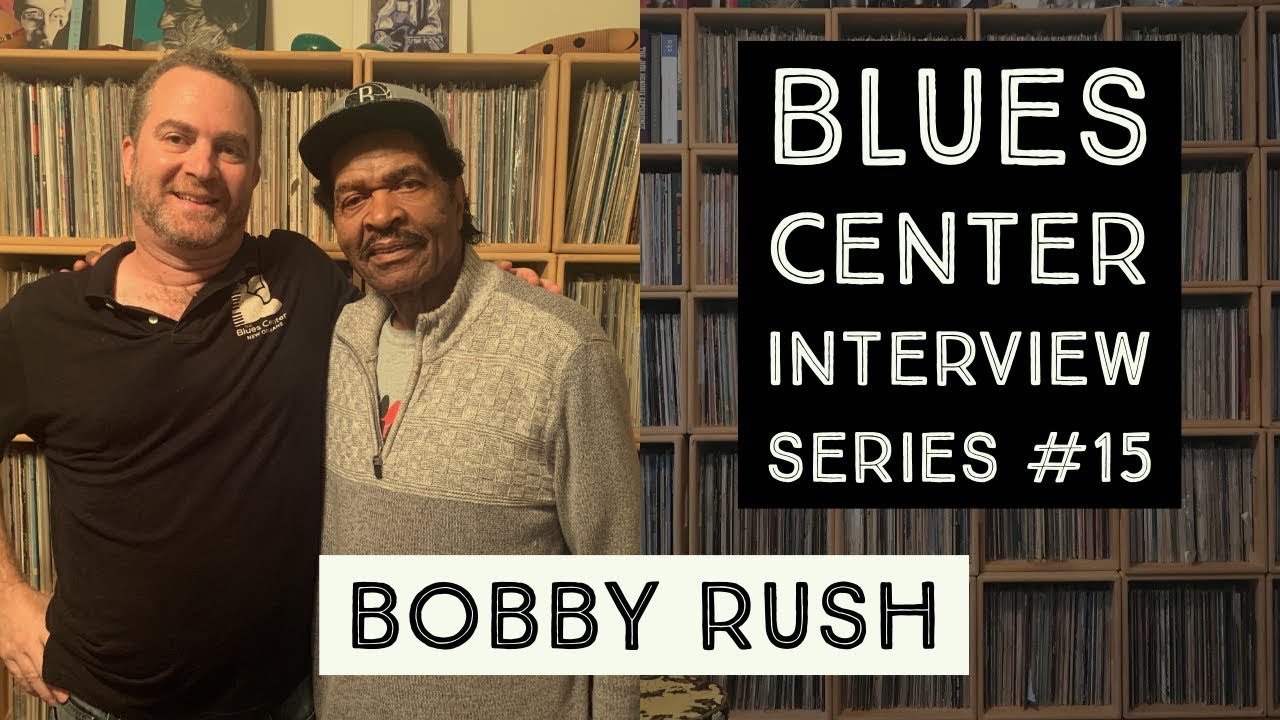
00:00:00 - 00:00:19
Bobby Rush
Blue is the mother of the roots of all music, blues and gospel. The blues is the mother of music. Period. If you don't like the blues, you probably don't like your mama. And that's, you know, Barbara Wray simplifies things. Yeah.
00:00:19 - 00:00:43
Ric Stewart
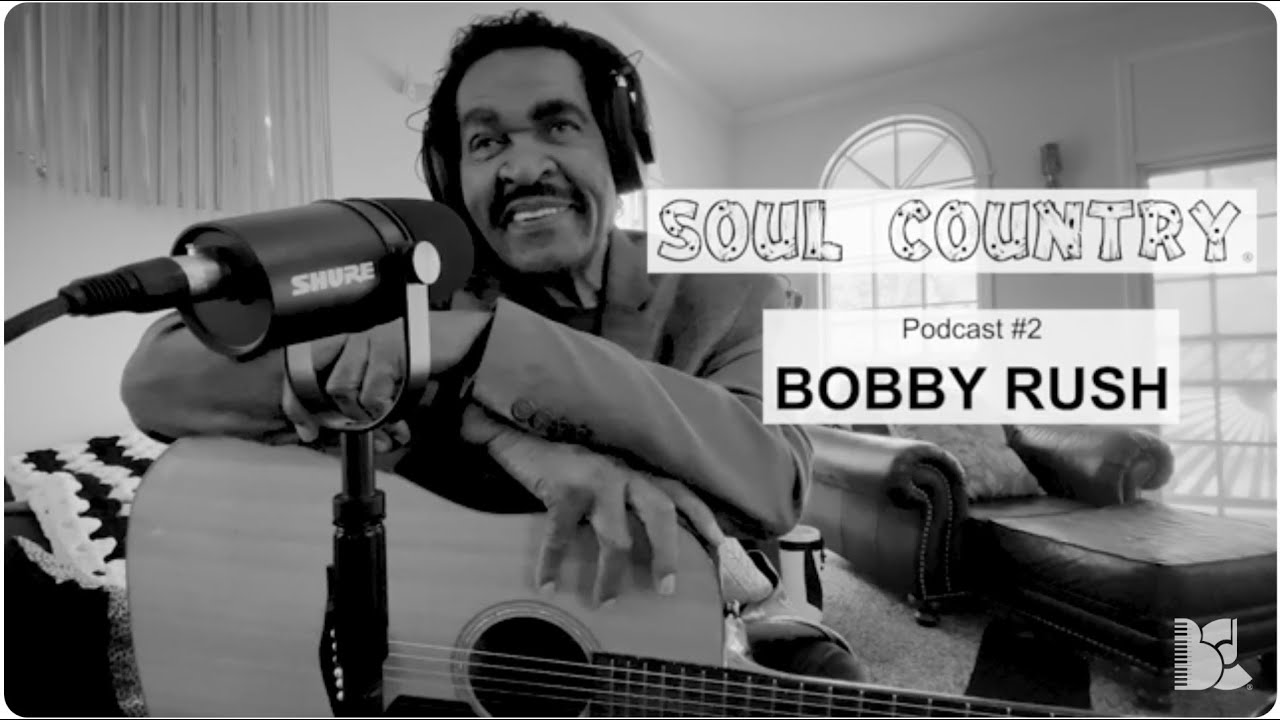
On Soul Country podcast number two, I sat down with Multi-grammy winning blues and funk legend Bobby Rush. We talked about his storied career and the intersection of country blues and the country life. I'm Ric Stewart, a community radio DJ since 1986 and award winning filmmaker, adding some real life podcasting to get deeper into Soul Country.
00:00:43 - 00:00:57
Ric Stewart
Tales from the intersection of bluesy Americana and countrified R&B. Listen in as we revitalize our cultural roots in westerns, blues and variety. And now, a word from our sponsor.
00:00:57 - 00:01:19
Ric Stewart
Ace production. Producer. Soul country for the Blues Center. Ace offers consulting and video production, YouTube channels, digital strategy and team building for companies large and small to ensure production access. Ace does not come well. Bobby tuned up his guitar, brandished his harp, and regaled us all with some tall tales from the Chitlin Circuit. And here's how it went down.
00:01:19 - 00:01:44
Bobby Rush
The honest with you, I get my I get my ideas from. From what I know, what I believe, what I heard, what I went through, and people that I love and respect. And this music. And, I can give you a name, but I can tell you I love the blues because I'm a blues man. But I love, love, love country western because they talked a story.
00:01:44 - 00:02:08
Bobby Rush
And the talk that I understand and relate to, because you guys talk about ups and downs is an out or it's ugly, sweet, good looking, a bad, what have you. And, I can relate to that, man. You know, I can relate to that, you know, and that's I get maybe that's why I like country western so.
00:02:08 - 00:02:32
Bobby Rush
Well, one of my first country western songs that I fell in love with is Guy had a song called you get the Hook and I get to pull bait. You get the hook and I get to pull. We're going down to the crawdad hole. Honey baby, my man, I thought that was. Hey, man, I thought that was the ace, man.
00:02:33 - 00:02:34
Bobby Rush
It wasn't that. No, better than that, you know.
00:02:35 - 00:02:38
Ric Stewart
Then you also had Nicky Hook. He was another track that's totally says Soul Country to me.
00:02:38 - 00:03:03
Bobby Rush
That was a big record from a New Orleans. Kind of a stop being for Louisiana. It was some people probably didn't know that that was that was a language in there. And then Nicky. Okay. Called Nicky. Okay. Language is Sepp hooker poo is like, oh, puka poo, you naked golly golly, Miss Molly, everything is pathetic now, you know, y'all know this.
00:03:03 - 00:03:19
Bobby Rush
That's that's Cajun toe. You know Creole. Yeah. You know God, golly, Miss Molly, everything is copacetic. Now look a pool. Look at you. Oh, what I want to do to you. That's that's Cajun talk, man. That's looking at a bow legged woman and saying, wow.
00:03:19 - 00:03:22
Ric Stewart
And you brought back pookie poo at some point, right?
00:03:22 - 00:03:42
Bobby Rush
Yeah, yeah, a little puke. Yeah. Yeah, poo poo poo. Classic poo poo. And ends playing Lane with me. God, you look good. You look. You look a pretty woman. Puja. Puka booboo. You my puka poo. You my puka poo. Me. Hey, I like you and I want you to be my. You know. And we come up with this thing.
00:03:42 - 00:03:44
Bobby Rush
Porcupine meat me.
00:03:44 - 00:03:45
Ric Stewart
Grammy winner and Grammy.
00:03:45 - 00:04:19
Bobby Rush
Winner and my first Grammy. Let me tell you what's interesting to me about this. First Grammy. First Grammy at 83 years old, my first record I ever could. And Louisiana. Although I'm a Louisiana God, I born in Louisiana, left and went to Arkansas. And every musician that Scott hi is from Louisiana except one guy best I of Jackson from Mississippi, who been a bandleader for me for many, many years, cut over hot in fifth, a song with me, different songs through the years and what have you.
00:04:19 - 00:04:24
Bobby Rush
Just a friend and a good player and good producer that everything all around kind of a.
00:04:24 - 00:04:28
Ric Stewart
Guy and devoted country music guy to his death. The Jimmie Rodgers, yes.
00:04:28 - 00:04:29
Bobby Rush
Yes, yes.
00:04:29 - 00:04:30
Ric Stewart
That's where the licks are sometimes.
00:04:30 - 00:05:00
Bobby Rush
Yeah yeah yeah. And and it happen. That would the best thing ever happened to me in my life. When a Grammy is a is an up a bicep but from Louisiana and had all lose that a musician is that one guy that's that I was in heaven man. So then the virus came in. So then I said, well, I got some stuff in the can, let's pull it up.
00:05:00 - 00:05:36
Bobby Rush
I didn't tell anybody there by the thought. I went to the studio, record it, but I didn't go to studio record again. I had it already recorded as and went picked the songs up for the first time. I picked out four songs in the can well did by other people I respect. So Holly I made a had about 8 or 10 songs, but I tried to pick the Mississippian because I live in Mississippi with Muddy Waters, Sonny Boy, Elmo, Jane, people like that and do the song that that they did and kind of uplift them because I looked up to them.
00:05:36 - 00:05:55
Bobby Rush
If I was a kid when I was a young man, this is who I look forward to keep me alive and as a music man. So I want to do that, to show that love and respect where I got my grip on That's a Blues Man and I put it out, want to grab all the roll?
00:05:55 - 00:06:04
Ric Stewart
And so that was you wrote a little special dedication to Howlin Wolf back to you. Right. That was but he wasn't just another guy you play with. This was a an national figure.
00:06:04 - 00:06:33
Bobby Rush
I like to Howlin Wolf because he was so different and good. I like to muddy water because his soul, he would dress so well so that I like a loose during because the soul he writes so well. I like a smoker because he's such a good songwriter. I like Ray Charles because he play piano so well. He sang deliver so well.
00:06:33 - 00:07:11
Bobby Rush
I like Steve a lot because he dynamic and height and he writes so well is so many people are like because of whatever reason I like him from I like Hollywood because he was so different and so good with the vocal. Were you like Bobby Rush and so many things I like about different artists, but I like I think Lucian Palatine no more that anybody Lucian I like to James Brown because he was so funky and so clever because James Brown could take a song and do things with it.
00:07:11 - 00:07:20
Bobby Rush
No one could do because he wasn't persuade the singer, but he could. He had a way of phrasing make you think he could.
00:07:20 - 00:07:21
Ric Stewart
The rhythmic genius.
00:07:21 - 00:07:45
Bobby Rush
Yes, yes. I'm not that a king of the children circle. And most time the Chitlin circuit clubs and festival pay more than a white club and festival. But. But playing a white club, it makes you look bigger, like you're a bigger artist and give you a bigger spread in your name. And it take you places that you never been, at least to take your place.
00:07:45 - 00:07:56
Bobby Rush
That people think that you somebody, you, this big goddess. But I have crossed over.
00:07:56 - 00:08:21
Bobby Rush
And now I'm such a blessed man to cross over and never cross out. I wanted a few mares have crossed over, have crossed out. I don't want to get into name called like a name. You. Some black players and blues singers that very, very known would white audience, white fans and black people. And I don't know.
00:08:21 - 00:08:27
Ric Stewart
Who they are. Your advice to somebody who is 1516, looking at the career ahead is to stay close to your.
00:08:27 - 00:08:57
Bobby Rush
What you should, right? You stay close your vision, stay close to your root. Because if you are a black man or black woman, you should never get out or remember who you are. Build that within your people. One thing I have Bill with my people is fan and my loyal to my fans, and they'll loyal to me. I don't say every time I'll make a whole lot of money, but I have a whole lot of fan black fan because I'm a black man.
00:08:57 - 00:09:21
Bobby Rush
I have a whole lot of white fans because I'm a black man. But I didn't always have that. But it always been where I was popular among my people. So now I have crossed over. But I always and I speak to you, you have to live by this lot that he's so can to understand that I want to crossover, but I don't want to cross out.
00:09:21 - 00:09:30
Bobby Rush
And a lot of people, a lot of black men's and women have crossed over probably that intention, but they're crossed out.
00:09:30 - 00:09:37
Ric Stewart
And what used to be blues and rhythm and blues has changed a lot, and it's gone through a lot of it's time has changed things.
00:09:37 - 00:10:18
Bobby Rush
Time has changed. But, I want to be careful about asking you with that time, but shame. But have you reset to change it up to time? And what have changed? So many things remain the same. It just that we are motivated to change our strategy the most time. A couple record companies, a management because the black guy get managed by white management and most of the time they want them to change because they can get job working for white clubs and white festival while white fans are thinking that that put them in another position financially.
00:10:18 - 00:10:42
Bobby Rush
Sometimes they do. Some damn it don't. But I think I've made if he talent that he should spread his wings to all people, black and white and white. But I try to work for all it. Get to the point now why I can't spread. Must have so thin that I don't have the time. That what a lot of the black clubs I used to work, but I still try to work as medium that I can because I want to be known and go down in history.
00:10:42 - 00:10:50
Bobby Rush
I was a man that crossed just bridge and never changed and never sold out.
00:10:50 - 00:11:11
Ric Stewart
Way to be a man. So yeah, my thinking on that too is like at the very, very core. There's a song you need to have that you need to have a performer who's got, honesty, genuine, like an artist in a voice. Maybe there's about to play. I need a rhythm. This. There's only like, these ingredients have to be there.
00:11:11 - 00:11:35
Bobby Rush
And I'm laughing when you said that because of all the interviews I have done, I never had nobody to ask me what you just asked me. I tell people all the time, first you need a song that a song has to fit in where you know or where you work it. You don't say, my baby, she gon on.
00:11:35 - 00:11:49
Bobby Rush
If you and the church, that's the wrong place for that. If you know your audience, know your area where you're going. You just don't go live in China and say, I don't like rice.
00:11:49 - 00:11:52
Ric Stewart
You got to come up with some rice material.
00:11:52 - 00:12:17
Bobby Rush
You know, you come with the rice material. You don't come to Mississippi, don't know about catfish, you know, talk about, you know, you don't go to Memphis. Don't ain't heard of good barbecue. I just. And on and on, you know, and but you got the right into. Where you going? You said, well, am I going to come to a school this morning where kids from 6 to 12.
00:12:17 - 00:12:35
Bobby Rush
What songs are you going to say? What direction that you going to try to take them? It's the same thing. I have a wide audience. I don't try to take all white songs to a wider audience, a black song to a black eye. I try to take a good song and perform it well.
00:12:35 - 00:12:44
Ric Stewart
You want to throw in a little music break? Maybe we should do something with the harp where you talked about, little Walter with the Chess Records label is a hit maker and a guy who made it happen, right?
00:12:44 - 00:13:11
Bobby Rush
Yeah. He was he was at the end of that in at chess. But he wasn't the only one that influenced me in that time period. That was Sonny Boy Williamson, the enforcement and Junior Parker. Nobody never talk about it but junior pop up with this guy. You know, they have a guy called Big Walton. I don't know why he calls a big warden because he was a as good a player of not a better than little Walt, but he never got the credit for if he did.
00:13:11 - 00:13:16
Bobby Rush
And that was a few guys around who played, but most of them was copies in which.
00:13:16 - 00:13:17
Ric Stewart
Junior Wells eventually.
00:13:17 - 00:13:43
Bobby Rush
Yeah, it was good. But yeah, the younger but but he could play. But he was copy of Sonny Boy and most other guy came up with a copy of And carry. Bill Cabot was copy of, The Walt, but I came up. Listen to little Walter. I live at 1223 Albany. Little Walter. Live at 1229 Troy. It was a two street back to back.
00:13:43 - 00:13:54
Bobby Rush
I could walk out of my back door, throw a little rock on his porch, and we would talk cross. That's what we was, you know, in the 50s. He lived at there until he passed.
00:13:55 - 00:13:57
Ric Stewart
And that was when you were a new Chicago.
00:13:57 - 00:14:09
Bobby Rush
Oh yeah album. What was what was the best harmonica play around? He was the best thief in the world. When I said thief in a world, I would take my harmonica and I would say.
00:14:10 - 00:14:13
Speaker 3
Me like, I.
00:14:13 - 00:14:28
Bobby Rush
And I would hear that same lick a month later. Don't want to. But a lot of songs as a recording studio, because he could take it to do what you couldn't do with the song. And, well, he, he could just he was a harp player.
00:14:28 - 00:14:31
Ric Stewart
And he could do just an instrumental and. Oh yeah.
00:14:31 - 00:14:49
Bobby Rush
Yeah, yeah. Oh, God. Yeah. You know, he played the harp like a like a horn player. He like a lot of horn player. You know, I'm a harp player. I think that, I go down in history when I'm dead and going people to talk about this, that I play harp and, but I played different for most people.
00:14:49 - 00:14:57
Bobby Rush
And, I guess some about the only guy around play. I'm a right handed person, but I do everything left handed. You know my.
00:14:57 - 00:14:58
Ric Stewart
Guitar.
00:14:58 - 00:15:10
Bobby Rush
You know, I play guitar right hand. But I think of it still, push it up or down? Abercarn do the same thing.
00:15:10 - 00:15:13
Ric Stewart
The little thing, the bend on a bent, bending notes.
00:15:13 - 00:15:26
Bobby Rush
Oh, yeah. And it being a note is as a pull, not a push. You know, in my hammock, I have a hammock on my hand. Now. And I first down we were talking about this. I reverse it.
00:15:26 - 00:15:27
Ric Stewart
The upside down harp.
00:15:27 - 00:15:29
Bobby Rush
Yeah. Yeah.
00:15:29 - 00:15:30
Ric Stewart
So high is on the left.
00:15:30 - 00:15:33
Bobby Rush
Yes.
00:15:33 - 00:15:39
Ric Stewart
Yeah. So are there any secrets I need to know? I played some, I played some basic blues harp, but I, you know, I put it down so well.
00:15:39 - 00:15:52
Bobby Rush
The bass, the blues, you get, note for notes like,
00:15:52 - 00:15:59
Unknown
Yeah. I'm gonna,
00:15:59 - 00:16:00
Ric Stewart
Scale.
00:16:00 - 00:16:04
Bobby Rush
Scale, scale. But just a wad of playing scales with it.
00:16:04 - 00:16:11
Unknown
Ha ha ha. And.
00:16:11 - 00:16:16
Bobby Rush
Discuss scale. But but but but my scale would be.
00:16:16 - 00:16:22
Speaker 3
La la.
00:16:22 - 00:16:30
Unknown
Oh,
00:16:30 - 00:16:44
Bobby Rush
Wow. Have you ever been mistreated, by someone you shouldn't have loved by?
00:16:44 - 00:17:03
Bobby Rush
Ever been mistreated by, someone you showed up? Oh. All of me and my mama could have left me for, She left me for a garbage.
00:17:03 - 00:17:07
Speaker 3
Died. She does not like that back then.
00:17:07 - 00:17:20
Bobby Rush
Why did they ever get my woman to come back home like that? I'm about myself a garbage trucks,
00:17:20 - 00:17:21
Unknown
Whatever.
00:17:21 - 00:17:27
Bobby Rush
Get my woman to come back home, people. Oh. I'll by myself a truck.
00:17:27 - 00:17:33
Unknown
Oh, look,
00:17:33 - 00:17:43
Bobby Rush
And when my garbage can get full, I'm taking a dump. And way, way, way out in the woods.
00:17:43 - 00:17:48
Speaker 3
The one.
00:17:48 - 00:17:59
Bobby Rush
Which don't have anything to do with a little water. But he was the greatest. He taught me one thing. Be yourself.
00:17:59 - 00:18:00
Ric Stewart
Great lesson in life.
00:18:00 - 00:18:01
Bobby Rush
Is life.
00:18:02 - 00:18:11
Ric Stewart
Okay, so there was two sonny boy Williamson's. There was John Lee. Yeah. Williamson was actual. Sounds like it should have been his name. And then there was rice, Miller. Rice, Miller. And he was the harp.
00:18:11 - 00:18:24
Bobby Rush
We were the harp was. He was. And and the lyrics story. To me, he was a talent. The one that's to me personally. And he was the one, you know, don't stop minute talking. Tell everything I know.
00:18:24 - 00:18:25
Ric Stewart
You know, one way out, one.
00:18:25 - 00:18:27
Bobby Rush
Way I love God. Please.
00:18:27 - 00:18:29
Ric Stewart
This stuff turns into the rock and roll station play.
00:18:29 - 00:18:30
Bobby Rush
Oh, my.
00:18:30 - 00:18:35
Ric Stewart
God, they were very durable songs. Oh, man. Heavy. And, bring it on home.
00:18:35 - 00:18:37
Bobby Rush
Bang it all.
00:18:37 - 00:18:52
Ric Stewart
So that song still kills me, Lee. But I learned about that from LED Zeppelin in 1972 or whatever, and I was like a five year old kid and like, what is going on here? You know? And they when that riff got electrified, just another level. Oh, but that's that thing you're talking about because there was like the acid blues.
00:18:52 - 00:18:59
Ric Stewart
The rock artist went back to blues and they got some more, you know, like they doubled down on it.
00:18:59 - 00:19:03
Bobby Rush
Right. A third thing, you mentioned this.
00:19:03 - 00:19:22
Bobby Rush
This go this interview could go down in history. You know, you looking at the only man to ever cross from where I came from to here. Let me tell you what happened to with me. Now they also done this week.
00:19:22 - 00:19:40
Bobby Rush
A Broadway play on my life. I could talk about it there beside the Broadway play on you first. Rod is in June 28th. I believe. There. We don't know what it's going to be, but my life. Let me show you what I'm saying.
00:19:40 - 00:20:18
Bobby Rush
I left Louisiana in 1947, went to Pine Bluff, Arkansas, by the way, a Memphis to sugar Saint Louis myself, Chuck Berry, Albert King night, early 1951 to Chicago. From that time to this time, I recorded 397 records. I've been up for Grammy five times, won three, been up for Blues Award 31 time, and won 18 of them. What I'm going to hear there's nobody that's living.
00:20:18 - 00:20:40
Bobby Rush
Have craft. Just breathe. B.B. King didn't make it. Cross is bred to do what I have done. Chuck Berry didn't make it. Cross this bridge to do what I have done. Sing to Sam Cook and we'll find out that Prince just didn't die.
00:20:40 - 00:20:46
Bobby Rush
Michael Jackson just didn't die. Honey, years from now.
00:20:46 - 00:21:10
Bobby Rush
What am I saying? That because I got this Broadway play I'm going on Barbara Royce life. This, say, slipped through the cracked. I'm here in Jackson, Mississippi. When you walk in my house, put up a ticket. My myself from the from all the things around me that make me look like I was here. And I was here all the time.
00:21:10 - 00:21:45
Bobby Rush
Look like what I was not doing, I was doing all the time. What I'm getting to is there's nobody. And the blue segment, who have had his label added a Grammy on his record on his label, Blues Man. Five years ago, I had the box set of the year was set up 580 masters of my box set. You know, too many people did it because I had too many people owned that made a mess of themselves to put on.
00:21:45 - 00:21:47
Ric Stewart
Right. So you getting back to the core to which is the writing.
00:21:47 - 00:22:14
Bobby Rush
By writing, publishing, I didn't know what I know. Now I've been taken a write honestly, but everything but now has come back. But even though the song that I written and portion I got taken after 35 years is back point, I'm going to God help mark my will and your mark. And you roll it down a hill and a mark come back to you.
00:22:14 - 00:22:34
Bobby Rush
At my age it had to Mark have came back. It's not many guys have done that. Not that I'm smart. Just, bless and bless. You know, I did a whole lot of things I shouldn't have done when a whole lot of things I shouldn't to went. But I want a whole lot of and did a lot of things was good for me.
00:22:34 - 00:23:00
Bobby Rush
One thing I have learned, I have learned that I don't know anything. And what I mean, tell what he know. He won't talk long because men don't know nothing. And I know that out of all the interview that I've done here for the last 10 or 15 years, this wanted a better interview that I did.
00:23:00 - 00:23:03
Bobby Rush
And a long time maybe in my life.
00:23:03 - 00:23:09
Ric Stewart
Appreciate you, man. Well, it's coming from the same place. We share the love of the same stuff. I mean, that's.
00:23:09 - 00:23:20
Bobby Rush
Thank you for what you have done. Thank you for what you done. They do what you plan to do because what you say about me, but me, what people perceive me to be.
00:23:20 - 00:23:24
Bobby Rush
And it means a lot to me. But what you stand for.
00:23:24 - 00:23:52
Ric Stewart
Is what I used to call a transparent showcase. Like I let people steal, let them be them. You know? But that's soul country, too, because it's like a place where you get found, you know, it's like, find your real self, that's why. But I think we're all a lot of us are aiming at the same place, whether we consider ourselves artists, which sometimes I do, but it's we're all trying to become whatever that is, a validated individual who who strove for something, you know, accomplished.
00:23:52 - 00:23:56
Ric Stewart
It, stayed true to the goals. You know, there's a few other things you could add.
00:23:56 - 00:24:03
Bobby Rush
I don't know what we all want with the same place and not because I'm. And that's been by what you're saying now.
00:24:03 - 00:24:04
Ric Stewart
We try, but.
00:24:04 - 00:24:29
Bobby Rush
We try because it's not that you so good. As I said before, I'm so blessed. I'm a blessed man. Oh, God, I'm a blessed man. To have you come back to this interview with me. I'm a blessed man. I have 397 songs, man. At my age, you know, I can remember at least 280 of them.
00:24:29 - 00:24:36
Ric Stewart
And it's some of it is the the work ethic and the drive that kept you paying attention. And you stayed active and in this process.
00:24:36 - 00:24:39
Bobby Rush
Right? I mean.
00:24:39 - 00:24:44
Bobby Rush
When I sit down to recite songs of mine, I can just.
00:24:44 - 00:24:55
Bobby Rush
In a little shack down by the bay, not bop a New Orleans. I meant to put a woman that on. When I was about 19, she went and told her, dad, if you want to marry me. The look on her dad's faith really was a sight to see. He's like, get out of here with you and don't you come back.
00:24:55 - 00:25:10
Bobby Rush
Number. Well, I wanted to meet a dad like a young man, Arab. But he didn't want a blues singer like Barbara Rose to get married to his daughter. But when I went by the house that day, he met me. Had to do with brothers. That a big brother, John, a damn dog named Beau, saying get out into combat, number one.
00:25:10 - 00:25:23
Bobby Rush
Her brothers and sisters take the dogs on and made him tell all my clothes I was running bad trying to get away down a dusty road I ran a real fast trying to get away. And I crawled to a railroad track. Are they here to get throwing rocks at me? Every time I start to look back saying, get out of here, you come back.
00:25:23 - 00:25:42
Bobby Rush
Number one. I sit down to get married to Jesus. Do solemnly swear to take this one more for your love for a wife, and not A1I love about the five year old. My mouth to say I do. Guess who walked to the door? Dad, mom, big brother John, the damn dog neighbor. What? I thought red. Then if I wanted to get married at the by the way to elope, I decided to go to Las Vegas to get a roof on my nose to vote.
00:25:43 - 00:25:53
Bobby Rush
Soon as I got the last week of that same day, I walked in with all the key and all the friend the damn dog again. I said that to you. Let you know that I can do all of my song. Almost like the same way.
00:25:54 - 00:26:04
Ric Stewart
As that one was. That was on porcupine, that's all. So I love that because it's so funky. You got any, like, good, groove ones. That's this element you brought into this thing where the funk is right there with the blues, you know?
00:26:04 - 00:26:37
Bobby Rush
So good where you know, I bring the fucking into. But that's the blues side of me. That's the blues side of me. About those days. About a week ago. And Guy said, who? One of your favorite guy that you recorded. On your last, CD, I said, okay. And I start to play a little song like this.
00:26:37 - 00:26:38
Bobby Rush
I'm on Get Up.
00:26:38 - 00:26:40
Speaker 3
In the morning.
00:26:40 - 00:26:46
Bobby Rush
I believe. How does my room.
00:26:46 - 00:26:50
Speaker 3
I'm going to get up in the morning.
00:26:50 - 00:26:56
Bobby Rush
Lord, I believe I does my broom.
00:26:56 - 00:27:00
Speaker 3
And I found me another woman.
00:27:00 - 00:27:07
Bobby Rush
Now, girl, you can have my room.
00:27:07 - 00:27:10
Speaker 3
I'm alright. I love to.
00:27:10 - 00:27:16
Bobby Rush
Tell out grand. Every town I know.
00:27:17 - 00:27:22
Unknown
I'm going to write a letter. Till I grind. Every town.
00:27:22 - 00:27:26
Speaker 3
I know.
00:27:26 - 00:27:32
Bobby Rush
If I don't find in Mississippi.
00:27:32 - 00:27:35
Bobby Rush
Maybe I find out in Chicago.
00:27:35 - 00:27:44
Ric Stewart
And that leads me to ask you about the album sitting on top of the blues, because it sounded like sitting on top of the world, but it was a different flavor.
00:27:44 - 00:28:15
Bobby Rush
Different flavor. And that's where coming from, sitting on top of the blues. The reason? Not when I don't want to do sitting on top of the world, sitting on top of the blue, because I am one of the few guys who then sitting on top of my game that me. I know quite a bit about publishing the writers how to go about doing it, and I want a few old men like myself at 8 or 7 years old for this advice on my own and how to get things done.
00:28:15 - 00:28:21
Bobby Rush
Computer wise pick up for you, don't you? Are you out of everything? This computer now?
00:28:21 - 00:28:27
Ric Stewart
Okay, let's talk about what you mean. When? Because I use the word raw. I used to have a TV show go raw. Music. What do you mean when you talk about.
00:28:27 - 00:28:50
Bobby Rush
Well, what I meant when I did my writing raw, I had put out a raw. Raw was like, stripped down. Well, how you get stripped down lower than stripped down, rather raw as it this way I'm going to do a record was no overdub, nothing but my feet. If you don't pick it up, you don't get it. If you mess up is messed up.
00:28:50 - 00:29:01
Bobby Rush
If you got it, you have it. No overdub. No. So let's take it in. No no no, let's let's let's try it again. Get it better. What you got first time. That's it.
00:29:01 - 00:29:14
Ric Stewart
And that album has Bernie Maroney on it. Yeah. Because I always love those Larry Williams tracks. We talked about this a little bit before we started, but so he was a super influential but in a short career. Yeah, he did some stuff, a little Richard.
00:29:14 - 00:29:40
Bobby Rush
If this were the Lovers, he was I can't think of the guy. Oh, God, who killed me. I can't think his name shot from lively. Oh. Big bad talk about the big bad dog, Jim. Coach Jim gave you to them to guy remind me of each other. Because both short life was so great and great songs and, great names.
00:29:40 - 00:29:42
Bobby Rush
I did as.
00:29:42 - 00:29:58
Ric Stewart
They had, as I recall, the story from Specialty Records recording in New Orleans, although they were based in California, and they'd gotten a Little Richard's hits on. And then Little Richard was going to join the ministry or something. And that was when Larry Williams shows up miraculously with like five hit songs in three years or whatever.
00:29:58 - 00:30:24
Bobby Rush
But, you know, I was a taxpayer speaking about that. And I know just last week they got a, document on the Richard and I just left New Orleans last week. They wanted somebody to talk about him back in that knew him at 11 to talk about it, his past involvement. So they found me and, you know, and we talked about some things.
00:30:24 - 00:30:28
Ric Stewart
So you now what year would you say you first started bumping into Richard.
00:30:28 - 00:30:32
Bobby Rush
1955, 1955.
00:30:32 - 00:30:34
Ric Stewart
And so he was already starting to have the hits.
00:30:34 - 00:30:36
Bobby Rush
Oh yeah. Well he wouldn't be. You would be.
00:30:36 - 00:30:38
Ric Stewart
Like Tutti Frutti or something like this next year.
00:30:38 - 00:30:43
Bobby Rush
Maybe. Yeah. He wasn't big at all. Just trying to get in the game like I would like everybody else was doing.
00:30:43 - 00:30:44
Ric Stewart
It and he was super country two.
00:30:44 - 00:30:53
Bobby Rush
Oh, are you coming here Richard? You don't get no country. And Richard and Ray Charles might come on. Oh, God would be country.
00:30:53 - 00:31:00
Ric Stewart
Yes, he he believed he was going to sing some country albums, but he wasn't kind of allowed to at Atlantic. And then he got as an artist.
00:31:00 - 00:31:09
Bobby Rush
He didn't want, he didn't want, at that time, he didn't want a lot of the how the, the footage of what he wanted to do, he wanted to do it, but he wanted to own it and control it.
00:31:10 - 00:31:26
Ric Stewart
So plug that back into what we said a minute ago. Okay. Maybe it wasn't about being an artist that's too highfalutin for the country, but being a bluesman, you were not taking an ordinary job. You knew you were getting into a show business or, oh, he came in. I mean, you were you were becoming part of the non whatever.
00:31:26 - 00:31:28
Ric Stewart
I'm not a working guy with a bunch.
00:31:28 - 00:31:51
Bobby Rush
I knew that early, so I knew that. I knew I had to stumble, I knew I had to know how. I didn't know about the money. I just knew I had what it takes to make people laugh. Because I'm really a stand up comedian. You can hear that through my songs and and, I got my first job with Red Fox.
00:31:51 - 00:32:17
Bobby Rush
He said, I got a job that pay you $7.50 a bandleader. But he also gave you $7.50 for comedian. That's okay, I take it. So the guy came in, he said about Redd Foxx, told me, you a comedian? I like the way you play. I got $10 right shot right back to me. The guy had $7. He said, I got $10.
00:32:17 - 00:32:37
Bobby Rush
If you make me laugh, I can make you laugh. He said, you can. It's okay. Tell me a joke. Make me laugh. Just he and I in the club. I'm on the stage by myself in his club. This white guy sitting there looking at me. And I'm looking at him. I said I went to this lady house by 831 night.
00:32:37 - 00:32:56
Bobby Rush
She came home at 915 and I was standing behind the door and he looked at me. I could see him jump. I know he was thinking if I went at 830, she didn't come to 930. How do I get in the house? I know I had it put the joke. As soon as you walked in the house, I step out behind the door.
00:32:56 - 00:33:21
Bobby Rush
I said, bull, she said, oh Bobby Rush, you almost get my panties. How? I said boo boo boo. And he laugh and I got a job. So I went to work in a lot of places at then as a bandleader, but I was also emceeing the show by myself at the Trap address. Real nice a man. I put his big overalls on, his suit on, and I'm already dressed.
00:33:21 - 00:33:38
Bobby Rush
That's when I get through telling my jokes, make people laugh as ladies and gentlemen, a start time I already. Yeah. Let's get together, get Bobby Rush. Have to step behind. It could pull ahead. I'll pull it. Overalls. I'm already dressed. Step back on the stage and I will work like that.
00:33:38 - 00:33:46
Ric Stewart
Red fox was blue comedy. Yeah, yeah. So there was. The blues was in a lifestyle. That's why with alcohol, that's why. And the music.
00:33:46 - 00:33:54
Bobby Rush
It don't get no blues than that red fox may even talk about you. So they use some words, as cursing that you make. You should be.
00:33:54 - 00:33:57
Ric Stewart
Raunchy. Oh, yeah. Because the church stuff would be the non-runner.
00:33:57 - 00:34:17
Bobby Rush
Yeah. Right. Exactly. But when you're in Redd Foxx shoes are my shoes. Especially anybody who is my age special to black churches. You understand that? The same people you see Saturday say what you see Sunday morning. Most of I want to think differently. Little sober on Sunday.
00:34:17 - 00:34:26
Ric Stewart
The sawdust is no longer on the floor. Okay. So Eddie Murphy Dolemite project also had the comedy in the in the, yeah.
00:34:26 - 00:34:30
Bobby Rush
That I got to tell you this.
00:34:30 - 00:34:56
Bobby Rush
You have to call me about a part that was a guy in Memphis or a producers. And he wanted me to be in him, and he wanted this song and his tenure to be a part of this movie. So I told you, I said I should like to meet Eddie Murphy because I know, I know at a distance.
00:34:57 - 00:35:29
Bobby Rush
I met him once, but I had never talked to him as now I made his movie. I got a chance to bond with him, just let him know how much I feel about. When he got to the set, I didn't know he was in control of everything, but he was. He stopped the set came up ugly, told me how much he appreciated my music in a month, appreciate my music.
00:35:29 - 00:35:33
Bobby Rush
The main know all about me.
00:35:33 - 00:35:54
Bobby Rush
Very wise man. Know about my music. My just know about me. And I just want to meet him because I want to introduce it to me so he get to know who I am. Oh, he already knew that. You know. But there was a shot for me and I didn't know what they expected of me. I said, what you need me to do?
00:35:54 - 00:36:17
Bobby Rush
I thought they going to bring me a strip. So now you just do you have other than me? Me. So I'm like, that's a you already doing this? I watch some of your clips. You already committed. You are a movie actor already. He a little me so I'll just be you sewn up I did they did about 3 or 4 class.
00:36:17 - 00:36:25
Bobby Rush
They were doing it to get different angles. I said, well where's you government? He said, well like what we got.
00:36:25 - 00:36:30
Ric Stewart
And you were playing in a way. You from the 70s, right? Yeah. Because you were doing a time warp in that movie.
00:36:30 - 00:36:33
Bobby Rush
I was in the I was what the web was. I would go to man, you know.
00:36:33 - 00:36:50
Ric Stewart
All right. So this is reminded me of that era. Okay. So the 70 Rush Hour album and that was a really good one. So you had Gamble and Huff. That's probably something that Murphy picked up when he was at the right age. That's right. That was a pretty cool album. You had you terrorized into an album form what you'd gotten going with Chicken Heads.
00:36:50 - 00:36:51
Bobby Rush
And it was that way.
00:36:51 - 00:36:51
Ric Stewart
Right?
00:36:52 - 00:37:07
Bobby Rush
Yeah. Everything I did with them was just a take off from something I had already done. But, speaking about Kenny Gamble, Leon Huff, I got very close to him and more close to Huff.
00:37:07 - 00:37:47
Bobby Rush
And he was such a, I had such great inspiration for the two. God, God. But they believed in me as a writer and a performer. I don't know what they saw in me. They like, but I just appreciate it. I don't know about anyone that ever gave me the kind of freedom to do what I want to do, and the two people I remember when I went to studio with them, when they and he walked out the studio, left the engineer with me from said, easy rhythm session.
00:37:47 - 00:38:07
Bobby Rush
Go ahead and do what you want to do. Do what I want to do. What I want to do is go to the death of you and look over Kenny and Leon, huff shoulders and find out what they was doing as producer, cause they were so great, so I could learn from what they was doing, but they trusted me and liked what I was doing.
00:38:07 - 00:38:10
Bobby Rush
So they said, well, you do it.
00:38:10 - 00:38:15
Ric Stewart
Now. And they had kind of built up a soul R&B stable of artists or something.
00:38:15 - 00:38:29
Bobby Rush
And they was a financially stable. What they were getting ready to say, the hell with some other thing. I guess they would try to break me in. That's the only thing that I regret. I didn't stick with them, but then I left and come to Mississippi.
00:38:29 - 00:38:35
Ric Stewart
All right. So let's I do also have a copy of the Sue album, which was awesome. And so that was what was going on with that one.
00:38:35 - 00:39:04
Bobby Rush
When I came to Mississippi, Chuck Berry was in the studio and England, and the name of my song was Dingley. So Chuck Berry and I had did a birthday party for Chuck Berry for five years, and Chuck Berry and his birthday party. I would do his birthday party. He would come out and pay me. So Baba is, it's I got to go down on my track.
00:39:04 - 00:39:10
Bobby Rush
You go on a farm. He's. I'll be back shortly. That'd be on a Friday. I wouldn't see him no more to Monday.
00:39:10 - 00:39:17
Ric Stewart
It's a good party for him. If he's not at it. Right. All right. So now let's talk about chicken heads with buddy Guy. Let's. What's going on? Yeah.
00:39:17 - 00:39:44
Bobby Rush
Well, when I did what I had a 50th anniversary. Really? About 51 year feature, one year fishing it. Yeah, I did a version. Jeff Talia convinced me to listen. 30 tangled distributors, which is owned by Sony. You've been doing business with him for many, many years. And they wrote they love you. You love them. Y'all got a good relationship.
00:39:44 - 00:40:13
Bobby Rush
What have we put out? A 50 year anniversary own chicken hell, I said, well, let me think about a few people. First thing I thought about Quincy. I thought about, capital. Then I kind of what that well made. I thought about, Tom Jones. That kind of went over my head, and I thought about Clapton.
00:40:13 - 00:40:32
Bobby Rush
And I didn't have a contract on Clapton. I was called over to to that town. He wasn't able to meet me to talk about those guys. I would have meeting with them to my manager and some other people that I had no one to tell them about. A few other things that recorded it didn't happen, so I kind of gave up on it.
00:40:32 - 00:40:56
Bobby Rush
So Jimmy also, Jeff, Delia, come to me, my manager said, when buddy Guy do it, I said, well, let me talk to the guy I talked to. But a guy said, yeah, man, whatever you want, Barbara, as I do. And he got into his wee kingfish manager. He said, yeah, I do once. Who's who was my muse when it was in town a few years ago.
00:40:56 - 00:41:28
Bobby Rush
They had all the invite me by the show, and I got a relationship with them. And, so maybe he could do it. So I said, okay, let's do it. Give him a shot. He said, I do, I do it by Rose. I really love you and I love you style. And I didn't think much of that. But when he sent me a demo back that he had done, I said, just a demo, you know, I recorded it, recorded?
00:41:28 - 00:41:43
Bobby Rush
He sent it back. It was a knockout. Or like I said, I don't know how we're going to beat this out. So I recorded another way by that. I recorded a little bit different.
00:41:43 - 00:42:02
Bobby Rush
Than Kingfish recorded that I thought I had missed out on by the guy. He said. Send me somebody up to around, let my producer go ahead and record it. So I paid for all this stuff. He sent it back to me.
00:42:02 - 00:42:09
Bobby Rush
How you like it? I like, but he got company Vocaloid next week or two.
00:42:09 - 00:42:40
Bobby Rush
I call, but as a buddy, you go to the song. He's. I did it already yesterday. Got the song back. I loved it. I said, well, Jeff is in your hand now, talking to my manager. We told the distributor, help us is going to be good. I think within 2 or 3 weeks I could be less. Everything we press was sold out.
00:42:40 - 00:42:52
Bobby Rush
It was an automatic sale because we had a limited press on it intentionally at that. I think maybe the only great, great we have with impress up.
00:42:52 - 00:42:59
Ric Stewart
Now, that record struck me as being pretty hard hitting. Yeah, I can't believe it's folks that are in their 80s. Yeah, that's what I was thinking. Yeah.
00:42:59 - 00:42:59
Bobby Rush
All right.
00:42:59 - 00:43:01
Ric Stewart
Thank you. Yeah. Oh the.
00:43:01 - 00:43:01
Bobby Rush
Energy everybody.
00:43:01 - 00:43:05
Ric Stewart
Level. It's reminding me of that era when they. Yeah the electric.
00:43:05 - 00:43:06
Bobby Rush
That's right.
00:43:06 - 00:43:08
Ric Stewart
Well heavy heavy.
00:43:08 - 00:43:33
Bobby Rush
When the Latin word came out I was going to go to Paris with my two waters. And they booed me with a water that same year, a year before, because of electric. They were looking for me. But it come as acoustic. Everything but the Legrand word came out from electric guitar and and that remind just chicken hair remind you of a 50 year anniversary.
00:43:33 - 00:43:37
Bobby Rush
Chicken is.
00:43:37 - 00:43:54
Ric Stewart
Remind me of that. So maybe it's like a portal through time where things are coming back to the some of these same sounds again, because I'm, I'm reminded when I saw that the Beatles put out the big movie of the Get Back in that era where they were chasing the sounds that got them interested in the business in the first place.
00:43:54 - 00:44:04
Ric Stewart
In the 50s, probably, yeah. Which was going back to a type of country blues with, when they brought in Billy Preston and they and they did come together. And you had done a version of that on the upstairs.
00:44:04 - 00:44:05
Bobby Rush
Yeah.
00:44:05 - 00:44:08
Ric Stewart
What was the circumstances that led to that one.
00:44:08 - 00:44:29
Bobby Rush
Well I wanted to, I wanted to make sure that I, when I did chicken here when I come to Captain Carter 1968 with the song chicken here, I want to make sure that there I was in the pocket. People didn't feel the same way about this. Back again by 50 year, they felt by the them. Let me explain to what I'm talking about.
00:44:29 - 00:44:53
Bobby Rush
When I came to Calvin Carter, who had Vee-Jay records and 6 to 8 as a Calvin called, I got a record called chicken, Here's Chicken. Here's what you mean by chicken. Hey, do me chicken. Lee lost there who was a preacher and a pastor church with, Calvin. God, he said we can't cut a record with no chickie.
00:44:53 - 00:45:15
Bobby Rush
It made no rap music back in the day. I said, no, it's chicken. He's. Oh, yeah. You from down south? Yo, he chicken here down south? I said yeah he said what? How do the song go I said daddy told me all down bad. Give up your heart but don't lose your head. You came along girl what did I do?
00:45:15 - 00:45:40
Bobby Rush
I lost my heart. My head went to was he had nothing to do with the chicken. And said yeah. Massacre at one show you all from the top to the bottom. I tell my guitar. I played that lick on top of like that. And that's the way the song go. So you play evaporation. So the the guy said, well, I could do it for in that Bible just saying from where you are.
00:45:40 - 00:45:48
Bobby Rush
I took my guitar, sang a song and started playing it.
00:45:48 - 00:46:08
Bobby Rush
About to play anything like that. It's got that sound pretty good, man. Let's get that to the air. We got one, two. I got it all. Baba baba baba baba baba baba. Now. But down as an. That's the way song go. Let's cut it real bad. Said good cut man. Good cut. I know he had to tape on.
00:46:08 - 00:46:19
Bobby Rush
I was showing the guys how to play it, singing at the same time. He said good cut, never cut it over, never overdub.
00:46:19 - 00:46:21
Ric Stewart
First take, best take. Tell.
00:46:21 - 00:46:30
Bobby Rush
You know that's I had a brother come by. Never had a piano on it. Not this just. That's true. I was only one.
00:46:30 - 00:46:30
Bobby Rush
It was him.
00:46:30 - 00:46:40
Ric Stewart
And it was country ish. And it was funky. And so then we talked a little bit earlier about, Nicky Hoke. He was kind of like in that world before. That was the swampy.
00:46:40 - 00:47:04
Bobby Rush
I like Nick. Nick. Okay. Because I'm from Louisiana, man from Louisiana, Haynesville, Louisiana. And it's relate to me because the Creole side of me and I could relate to it because it was talking about Cajun kind of stuff. Way down Louisiana, down in cage land. Those guys. I'm not that girl. Okay? Forget it. That's it. I dig it out.
00:47:04 - 00:47:14
Bobby Rush
Is good. Do they? Y'all just good with that? Yo, bugaboo. You. Hey, yo, booboo, you got here to the car. That's an olive oil away. Yeah.
00:47:14 - 00:47:21
Ric Stewart
So I first knew that from the Aretha Franklin version, which was pretty cool. Pretty cool. Yeah. And that was Atlantic and Jerry Wexler and the.
00:47:21 - 00:47:40
Bobby Rush
Yeah, yeah, yeah, but I had it before. This is right. Good stuff, though, Calvin. Kind of like at that record and I want to cut it. And he was I had some people that he just like this I like why I want to cover this song, but I want to cover it my way. So he, he went along with it.
00:47:41 - 00:47:57
Ric Stewart
Yeah. And so you've, you've also been able to, you know, keep your production kind of lean and minimal, which is part of that, that kind of blues feel. But I was thinking of another one where you bring up like the, you know, the stuff a smoke is too funky and, funky to funk. So you play the rogue in the lyrics, but you're not really like that.
00:47:57 - 00:47:58
Ric Stewart
Real life.
00:47:58 - 00:48:26
Bobby Rush
Yeah, well, you know, I wasn't born to make love, y'all. I want everybody to know I'm a November child. I'm a Scorpio Baba a fucking music that my game. Making love to my woman. My favorite thing. Gotta be funky. Anything I do, yo got to be fucking. You know this kind of like what I do I'm a blues man, but I'm fucking with it I think I'm the only blues man.
00:48:26 - 00:48:51
Bobby Rush
Is down with the blues and fuck, I believe I'm on his man round now. Play that kind of music and then play this kind of stuff. But,
00:48:51 - 00:48:56
Bobby Rush
They call me the fucking blues singer.
00:48:57 - 00:49:06
Bobby Rush
Cause I've been highly howling around your door.
00:49:06 - 00:49:14
Bobby Rush
When it call me the fucking blues I go. Cause I've been howling, howling all round.
00:49:14 - 00:49:24
Speaker 3
You don't.
00:49:24 - 00:49:27
Bobby Rush
Give me what I want, little girl.
00:49:28 - 00:49:31
Bobby Rush
You only have to hear me.
00:49:31 - 00:49:35
Speaker 3
Well, after the.
00:49:35 - 00:49:57
Bobby Rush
You know, I laughed about that because that song remind me, Howlin Wolf or talking about the Howlin Wolf. He'd been howling so long, it made his task so give me what I want. You want to hear me out no more? You know, I just put in a fucking way those kind of things that he had.
00:49:57 - 00:49:58
Ric Stewart
Howlin for my dog.
00:49:58 - 00:50:01
Bobby Rush
Yeah. How how how how. Wow.
00:50:01 - 00:50:05
Ric Stewart
Yeah, yeah, he started off with it was maybe kind of like a gimmick, but he built it in.
00:50:06 - 00:50:06
Bobby Rush
Between.
00:50:06 - 00:50:07
Ric Stewart
For the act.
00:50:07 - 00:50:26
Bobby Rush
Yeah. You know. Yeah, that's what I think I do. I just showed you example then, but I'm not boxed up to the blues. I want a few guys around now. Can go from Chicago from there.
00:50:26 - 00:50:48
Bobby Rush
Swing low, sweet chariot. Stop letting me, and go from that to the gospel to the card to Western to. I'm one of the few guy left. You know, Ray Charles could do it, but then two met a guy can go from that point to the next point, and. And that level. Lose the gut and grits of who you are.
00:50:49 - 00:50:49
Bobby Rush
You know.
00:50:49 - 00:51:04
Ric Stewart
I was in visualizing like, a platter of Americana. Yeah. Oh, yeah. Like different little food types on it. Yeah. But but I mean, it is just such great stuff that's picking this up anyway, so I'm so glad we had a chance to have this conversation. I'm trying to keep it up a little bit. But you know, this was tremendous.
00:51:04 - 00:51:07
Ric Stewart
And you know, you are the blues funk showman.
00:51:07 - 00:51:09
Bobby Rush
I'm on your plate, man. I'm on this plate.
00:51:09 - 00:51:15
Ric Stewart
Yeah. We're just we're serving it up there. Yeah. Put it on a platter for America once again. Thank you very much, Bobby.
00:51:15 - 00:51:29
Bobby Rush
Well, thank you for having me on. I appreciate you and thank you for what you have done, what you're doing, what you plan to do. Because, what you do, say about me, what people perceive me to be, what we got to do the just beginning of what was coming.
00:51:29 - 00:51:52
Ric Stewart
Thank you for listening to episode two of the Soul Country podcast with Bobby Rush, brought to you by Ace Production in association with the Blues Center. And a special thanks to Reed Mathis for our theme track, We Ride. Tune in again to Soul Country for more insight and culture and lore of Roots music and our next program with Chris Thomas King and find trailers, highlights and playlists, as well as a full archive of episodes at Soul country.com.
00:51:53 - 00:51:54
Unknown
Good god. Ha!