00:00:00 - 00:00:28
Speaker 1
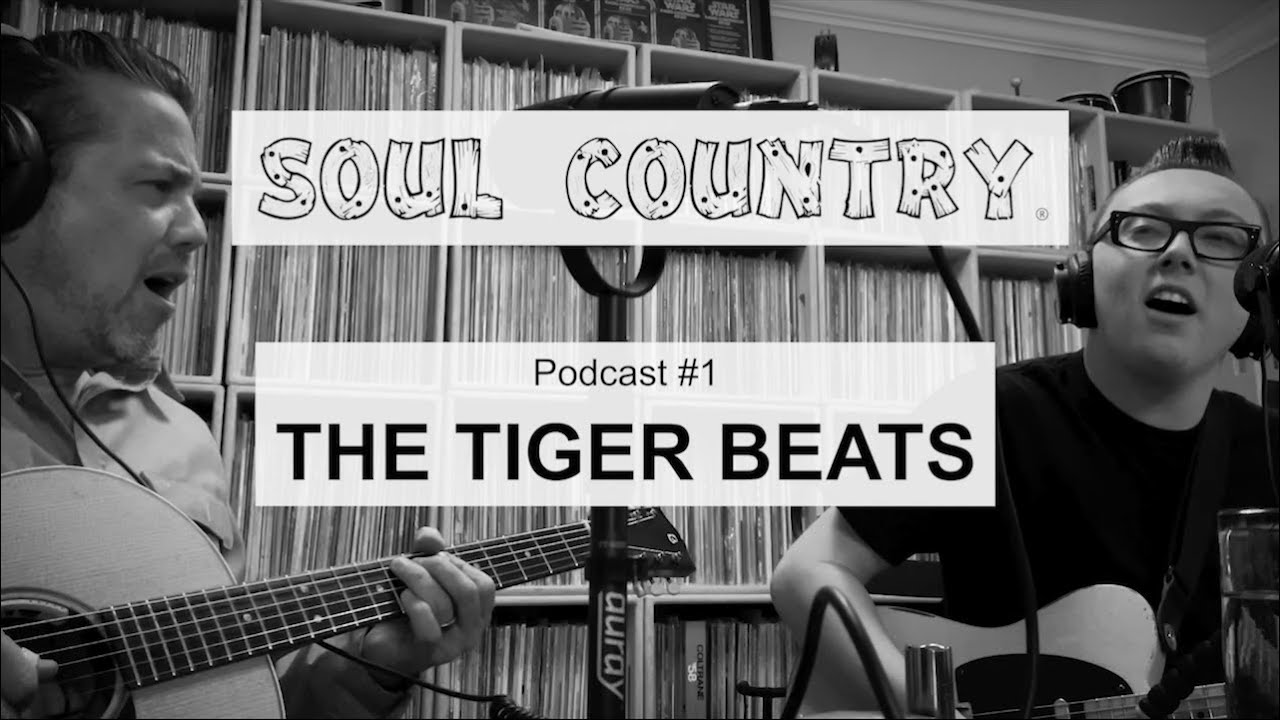
I. I do. This week I sat down with the Tiger Beats, a special band of blues purists who play a weekly residency at the 5-Spot in East Nashville. We talked about apprenticing the blues the way The Stone did, shining up gems tracks by the masters and their craft converted me into a regular. I'm Ric Stewart, a community radio DJ since 1986, an award winning filmmaker moving to podcasting to deepen insights into the roots music we all love.
00:00:28 - 00:00:53
Speaker 1
And this is episode one of Soul Country tales from the intersection of Americana and R&B. Listen in as we revitalize our cultural roots in Westerns, blues, vaudeville, and variety. And now, a word from our sponsor. Ace production produces Soul country for the Blues Center. Ace offers consulting and video production, YouTube channels, digital strategy and team building for companies large and small.
00:00:53 - 00:01:18
Speaker 1
This is your production access. Ace does.com. Tiger beats vocalist Patrick Sweaney, a 19 year old guitar phenom. McKinley James are caught in the crossfire of soul country, where guests get a chance to interview each other. And here's how it all turned out. Since there's a large age gap between you two as players, how did you ever come to be in a band together?
00:01:18 - 00:01:48
Speaker 2
Actually, Mickey's father, Jason Spey, who plays drums? For Mickey, he was a while. He was drummer in Lo straitjackets. I opened a run of dates with them. We had the same booking agent, Hope, and, just sort of became friends and kind of, you know, saw each other another, around. And, because I really admired the straitjackets and, and Jason was, a younger cat and like, we would see him warm up with, like, playing jazz tunes while they, you know, all their way into soundcheck and stuff.
00:01:48 - 00:02:06
Speaker 2
And I was like, oh, man, that's bad. But then he would shuffle. So when I saw that, saw him play with JD McPherson, he played his first gig at a hair salon with JD, and, and I said Jason was playing drums for him, like me. And that's, you know.
00:02:06 - 00:02:07
Speaker 1
Can you nail it at a hair salon?
00:02:07 - 00:02:29
Speaker 2
Yeah. They, they killed it with him. It was just a JD as a trio. And, Yeah. So it was. And Jason mentioned that their problem that they're probably moving here. So, I immediately because I'd been trying to put this band, the Tiger Beats together, the band that Nikki and I have together, for a long time in Nashville.
00:02:29 - 00:03:00
Speaker 2
And, but, you know, Nashville's full of great musicians, but it's not full of great blues musicians, like guys who, you know, just play blues and know that catalog in and out. And what just, you know, they don't play other kinds of music, which is kind of a tradition I came up in, you know, when I was learning, you know, playing in Northeast Ohio and being able to go to bars, sit in with bands, sub for guys and bands, you know, playing blues and then doing that on my own, at least the blues music that I'm interested in.
00:03:00 - 00:03:19
Speaker 2
And I think a lot of that just got pushed to the side and which is really, I think, I think the decline in singers, where it became the sort of acrobatic contest or sort of, you know, and again, it's a thing it's like, you know, the air of the big rock guitar solo and then and.
00:03:19 - 00:03:21
Speaker 1
And things like, and that was. Yeah. When I know you're talking.
00:03:21 - 00:03:53
Speaker 2
Happened like I really think like that, you know, I love buddy Guy and I love Jimi Hendrix, but when buddy Guy started playing a little more like Jimi is approaching it more like Jimi Hendrix. You're than that, that I, you know, I think that I think that was a real sort of that was the, the kind of the bellwether of just like, hey, this is, you know, people are viewing this in a different way now, mind you, play an old time kind of T-Bone Walker guitar ain't going to get, you know, get there because everybody, you know, that's just the fashionable thing.
00:03:53 - 00:04:16
Speaker 2
You know, that type of playing, at least on the at least for the, you know, your average entertaining person who goes out to see entertainment, you know, it's going to be an even, you know, the dawn of rock and roll kind of, you know, it kept getting bigger. So the important more things that influenced other kinds of music so that I think, you know, we sort of lost a little way.
00:04:16 - 00:04:38
Speaker 2
So guys are really learning to play blues from a rock perspective. Whereas, you know, I really have been conscious of that my whole life of knowing like, okay, I love the Rolling Stones, I love LED Zeppelin, but they're not playing like British guys are learning from other rock and roll bands are learning from the source. And that's why I was sure.
00:04:38 - 00:04:42
Speaker 2
Right. And that's why the bands after I'm like these bands because, you know, it's like.
00:04:42 - 00:04:43
Speaker 3
I mean, they did these other with muddy.
00:04:43 - 00:05:06
Speaker 2
Yeah. I mean like all those are and even, you know, they were very, very they were, they got it from the source and were able to be creative through it. And I think and there is bands that were influenced by them, I just felt like there's this huge gap and kind of presence that at least is a ploy applied to blues that if they just listen to the real stuff.
00:05:06 - 00:05:14
Speaker 1
So by age 18, obviously you would become a blues aficionado. But tell me more about growing up in the music that was around in the house in your early days. Sure.
00:05:14 - 00:05:42
Speaker 3
I, well, my dad was always, you know, playing records in the house, and everything from, rock and roll, soul, early R&B, blues stuff. And, it's just always that music. Always. And, you know, and I like rock music, you know, that 80s rock and all that stuff. But the roots music, you know, traditional R&B and blues music really just stuck out to me because it was like, I don't know, I just felt it was raw, but it was it just had like a weight to it, you know?
00:05:42 - 00:05:47
Speaker 3
It wasn't just like a song. It's like, oh, this is, this is badass, you know?
00:05:47 - 00:05:50
Speaker 1
Might be a good time to throw in a little, you know, musical interlude here.
00:05:50 - 00:05:50
Speaker 2
Yeah, yeah.
00:05:50 - 00:05:52
Speaker 1
Oh, wow. That came together.
00:05:52 - 00:06:04
Speaker 2
Let's, do you want to do one of the wolf ones or something like that? Maybe, like. Yeah, just like I was trying to think that was because I know that was the one. Like, we started playing.
00:06:04 - 00:06:09
Unknown
The.
00:06:09 - 00:06:10
Unknown
Line from.
00:06:10 - 00:06:11
Speaker 2
Some folks.
00:06:11 - 00:06:16
Unknown
Out there like this is the some folks, they're like, dad.
00:06:16 - 00:06:24
Speaker 2
We're on our way. I'm Bill here. Don't you call me fat.
00:06:24 - 00:06:40
Unknown
They're my comfort. Like Bill Cosby. You know, I Lord, I got everything.
00:06:40 - 00:06:41
Unknown
Lord.
00:06:41 - 00:06:50
Speaker 2
And a good woman needs.
00:06:50 - 00:06:54
Speaker 1
So I noticed the Howlin Wolf sound is pretty core to your approach.
00:06:54 - 00:07:14
Speaker 2
Oh, it's such a huge influence on me. And a lot of it. I mean, before I could really learn to, you know, decide on me to to kind of to sing more like Wolf and really because that was a long time, you know, as a, you know, I didn't, didn't used to do a lot of stuff, you know, it took it took some aging into it.
00:07:14 - 00:07:39
Speaker 2
And, but the energy and really that interplay between him and Hubert Sumlin, his guitar player, which is just something I just admired so much of that chemistry. And you know how, Hubert would react to the Wolf's vocal? Very much very similar way. I think that, that Mickey reacts the vocal in that dynamic. And that's something that just isn't.
00:07:39 - 00:07:46
Speaker 2
You just cannot learn that by somebody teaching you. You've got to be able to hear it and hear it your own self on those records.
00:07:46 - 00:07:46
Speaker 3
Sure.
00:07:46 - 00:08:02
Speaker 2
Or on the gig, you know. Yeah. It's, but that's but yeah, that Wolf, that dynamic, you know, that that energy is definitely one of the, one of the big driving forces in all the music. I do.
00:08:02 - 00:08:07
Speaker 1
Yeah. I yeah, I've been look at. Yeah. Wolf is kind of like a, yeah, a sort of a gold standard on a vocal style truly.
00:08:07 - 00:08:13
Speaker 2
And is but his phrasing too, that's the thing is like that, you know, that sound is something. But his phrasing, the way he hits things.
00:08:13 - 00:08:15
Speaker 3
He had good phrasing. Oh, yeah.
00:08:15 - 00:08:35
Speaker 2
Yeah. And it's, you know, he was a really good harmonica player, too. And you think I'm not a flash or anything like that, but his pocket is so, so great, you know. Oh yeah. And the few that he does, at least, you know, which I really like Sonny Boy Williamson, the number two one that was in the went to Europe and things like that.
00:08:35 - 00:08:55
Speaker 2
And, and I see a lot of similarities in that, the way that that generation carried themselves and really threw their whole self into it. Like that was another thing of like, there's no, you know, having fun. Like, I'm going to play a couple blues tunes and just to have fun, like these guys were, what they were doing was everything they had and they were giving it everything.
00:08:55 - 00:09:00
Speaker 2
They got completely in the moment, completely committed.
00:09:00 - 00:09:07
Speaker 1
What advice would you have for a young musician trying to succeed in a career in music today?
00:09:07 - 00:09:12
Speaker 2
Have rich parents?
00:09:12 - 00:09:15
Speaker 2
That is the jaded Nashville perspective.
00:09:15 - 00:09:17
Speaker 3
But, rich?
00:09:17 - 00:09:38
Speaker 2
Yeah. Average parents. Nuts. So, I mean, my advice is always the same. Listen, do more listening than than playing or listening than talking. And that means with your instrument and that means with your mouth.
00:09:38 - 00:09:39
Speaker 1
It's like a lesson for life, right? Yeah.
00:09:39 - 00:10:03
Speaker 2
Like they're like, they're it's always, if you're open to it, if you're if you open up to it, it'll, it'll, you'll get something out of it. And that and again throwing all of yourself. Don't ever when you get up and you put your instrument in your hand or you get up, sing you absolutely every single time be in the moment and performing.
00:10:03 - 00:10:14
Speaker 2
That is something I mean, and, it's I've never you'll never regret it and you'll always perform the best is which is what you want to do.
00:10:14 - 00:10:16
Speaker 3
And people can tell when you're just.
00:10:16 - 00:10:44
Speaker 2
Everyone can't lie to an audience. They know immediately. Yeah, if you don't, if you're not there, they ain't there either. And that's man, that was something that I really admire about Mickey a lot, is that none of that had to be explained if we started playing, you know, especially playing this, you know, little weird little, awesome little beer joint, you know, every Monday, you know, like, like this place.
00:10:44 - 00:10:46
Speaker 2
The place was funky, man. You know? Yeah.
00:10:46 - 00:10:50
Speaker 3
Had some definitely had a vibe. Yeah, yeah.
00:10:50 - 00:10:56
Speaker 2
Fucking he would just know and it wasn't, you know. And sometimes we playing there wouldn't be anyone there. But for whole.
00:10:56 - 00:10:57
Speaker 3
Sets. Yeah. The whole.
00:10:57 - 00:11:16
Speaker 2
Sets. We just burnt you put you put yourself into it. You realize it's, you know, the music sounds so good and you get so much from it that you're always. It's always worth it. You always feel good, you know, like exercise, I guess. You know, it's hard too. It's hard getting started. But once you do it, you never regret it.
00:11:16 - 00:11:18
Speaker 2
But, sure.
00:11:18 - 00:11:24
Speaker 1
But yeah. All right, let me throw this one over to Mickey. Would you say Blues holds a central place in your musical world?
00:11:25 - 00:11:50
Speaker 3
I would say so. And even outside of the Tiger beats with my original band, we still do blues stuff, you know, it's, original music and stuff like that, you know, soul, rock and roll stuff. But it's still always will always be my playing, no matter like what I do, even if it's not like a blues based thing that I'm playing on or doing something I still have, it'll always be with me, per se.
00:11:50 - 00:11:55
Speaker 1
Yeah. Once you bring it in and you master it, you're going to be, employing it and that.
00:11:55 - 00:12:18
Speaker 2
And that is something I really again, another thing I admire so much about making, because it is that thing, you know, he's, you know, that keeping that brevity and phrasing and, you know, never wasting a word. That's why I like about authors. That's what I like about, you know, musicians, you know, of, of of every single syllable counts, every, every word.
00:12:18 - 00:12:25
Speaker 1
So, Mickey, what makes a great show great for you?
00:12:25 - 00:12:30
Speaker 3
I don't know, there's a lot of things that go into.
00:12:30 - 00:12:56
Speaker 3
Makes a great show. If everybody in the crowd and the band really like. Well, even if the crowd isn't really liking it, it could still be a great show. Knowing, well, knowing that everybody on the stage is they're on the same page and everybody just is killing it. And everybody's making, you know, we're looking at each other with laugh and sharing laughs, you know, just really into it.
00:12:56 - 00:12:59
Speaker 3
Even when the crowd could be totally ignoring you.
00:12:59 - 00:13:11
Speaker 1
So, Pat, a little bit on the the backstory here, you play a lot of New Orleans material, and I often ask this question, but New Orleans is rumored to be the home of the blues, and it's in a bunch of songs that way. How do you see it?
00:13:11 - 00:13:24
Speaker 2
I mean, I think, New Orleans is sort of like a it's one of our most influential American islands. Well, that's it. It's funny of how, like, you know, it really.
00:13:24 - 00:13:41
Speaker 2
The music is definitely there's, there's there's a real tradition there. And, and the way that it sort of came in together with rock and roll and it came into there, I mean, like, I mean, it's telling places that are home of the blues, home of the blues. I mean, I, I'm, I'm not so sure that there is one.
00:13:41 - 00:14:05
Speaker 2
I think any place that you had, you know, that generation of people where blues became a thing of that was, you know, your primary, you know, popular music, not saying it's pop music, but it was the popular music. It was the popular. It was the popular form entertainment like that didn't happen in just one place. You know, obviously the urban, you know.
00:14:05 - 00:14:07
Speaker 1
It was a larger cultural phenomenon.
00:14:07 - 00:14:32
Speaker 2
Yeah. I mean, you know, there there were black people in all the major metropolitan areas in the South as soon as the as soon as they could get away from the rural areas, you know, and that's so that, definitely, you know, that's why it seems like these things, these huge pockets and these huge pockets of creativity, I mean, that's just sociology.
00:14:32 - 00:14:38
Speaker 2
They're going to be there and they're going to go where the people go. So we're going to play where the people play.
00:14:38 - 00:14:54
Speaker 1
So my next question is related to that. So let's discuss country blues versus country versus blues. So here in soul country you know we cover that kind of overlap.
00:14:54 - 00:15:22
Speaker 2
I mean you can go a lot of different ways, about this. I mean, the, you know, you can say there was a lot more lines drawn between, Like white and black music. After they figured out we could sell records, we could record music and sell it. So that's. And that's a pretty modern phenomenon. As far as, like, what is blues?
00:15:22 - 00:15:31
Speaker 2
What is country? What is what is soul? That's, you know, that's tricky. I mean, you know, there's definitely.
00:15:31 - 00:15:55
Speaker 2
Country music, you know, and I'm sort of along the lines with, with Tyler Mehan co that it's, it's always been pop music, you know, it's outside of like, you know, your fiddle tunes and things like that. So it's always this, you know, you're trying to, to execute at the height of the technology at, at at during the recordings.
00:15:55 - 00:16:05
Speaker 2
You're trying to be influenced by these things. You have these certain tenets that you adhere to, but it's a really.
00:16:05 - 00:16:19
Speaker 2
I guess you can get a very, very stable type genre of thing of like, what is and what is. And you could definitely tell. And, and it was also governed by who did it, who could do it and who can't, you know. And and still is.
00:16:19 - 00:16:21
Speaker 1
It's popular. I mean.
00:16:21 - 00:16:23
Speaker 2
Far as popular as popular country music.
00:16:23 - 00:16:28
Speaker 1
But if you looked at all the kingpins of country music, they all have a serious blues. Of course. I mean, you know, of.
00:16:28 - 00:16:42
Speaker 2
Course, Hank Williams, you know, that thing that's, you know, but also, you know, guys like Bobby Bland, my favorite singer, he was influenced by Perry Como and his phrasing and his diction. You know.
00:16:42 - 00:17:00
Speaker 3
There's a lot of, blues guys that in later 70s went back and covered country stuff. Oh, yeah. I mean, Oh, yeah. For, like, we were talking about little Milton before we went live here. Little Milton covers, behind closed doors. And cuz it. I mean, God.
00:17:00 - 00:17:02
Speaker 2
Is that a good record?
00:17:02 - 00:17:05
Speaker 1
Those are some of the good country records. So there was Ray Charles's country, right? Oh.
00:17:05 - 00:17:06
Speaker 2
I'm sorry, it's a great one.
00:17:06 - 00:17:22
Speaker 1
Yeah. And then, Yeah, Bobby Rush said that to me too, that, you know, it's, country is just popular music, you know, but to somebody from the country and then. Right. And then you got, you know, James Brown came and played the Grand Ole Opry in 79. He's like, you know, country, just white man blues.
00:17:22 - 00:17:25
Speaker 1
Yeah. So it's, you know, it's all very tied together.
00:17:25 - 00:17:54
Speaker 2
Very much is, you know, I think, definitely the storytelling and the lyrical thing of country music, I think is why it tends to be more of, you know, very. Kind of cross-cultural influence, more so than, you know, maybe the other way around. Because, you know, you think about, like, how easy it was for a lot of like, soul guys, like, like Solomon Burke, you know, like his real big.
00:17:54 - 00:18:03
Speaker 2
It was down in the valley like a folk song. You know, his his you he'll have to go the gym. Reason that is.
00:18:03 - 00:18:04
Speaker 1
Yeah.
00:18:04 - 00:18:09
Speaker 2
Yeah, yeah. And that's just that sort of thing of them being able to apply this just.
00:18:09 - 00:18:17
Speaker 1
Absolutely. And all the guys that are really from the country, it's some level. Oh, absolutely. And I count the countries like any town that doesn't have a hundred thousand people.
00:18:17 - 00:18:17
Speaker 3
Right right.
00:18:17 - 00:18:19
Speaker 1
Right right.
00:18:19 - 00:18:20
Speaker 2
Right.
00:18:20 - 00:18:31
Speaker 1
All right. So the tiger beats at the five spot between you know a lot of money's over there. Let's talk about some of those mini sets. So within your set you often do a Howlin Wolf Bobby Blue Bland Fats Domino. Who else is in that category.
00:18:31 - 00:18:51
Speaker 2
Well, as you heard when we were to soundcheck and we're trying to work up our little Milton, you know, a couple little Milton numbers. I mean, Bobby Blue Bland is my favorite singer, and that's that's a tough race, you know? So that was, Ted Nye's relationship really, really, really kind of cemented, 20 years ago with me.
00:18:51 - 00:19:14
Speaker 2
He was turning me on to some of the Bobby Blue Bland stuff. I didn't know, and I didn't realize there was this just huge catalog of stuff, even well, into the 60s. They're just fantastic records and just completely invisible to white people. Like, yeah, like absolutely as good. I mean, records that sound like could have been bigger than Sam Cooke, bigger than Ray Charles, and it just invisible.
00:19:14 - 00:19:28
Speaker 2
And then so we will do what I mean, Bobby being the favorite, I think of the band, you know, of, of the of the material we do together and we know I'm sure we know we have at least, you know, ten to a dozen of Bobby.
00:19:28 - 00:19:29
Speaker 1
Songs we can.
00:19:29 - 00:19:30
Speaker 2
Do in a larger.
00:19:30 - 00:19:34
Speaker 1
Pop culture. Yeah. Relevance is like Mr. T, I said, pity the fool.
00:19:35 - 00:19:35
Speaker 2
Oh, yeah?
00:19:35 - 00:19:36
Speaker 1
Yeah, like that kind of came out.
00:19:37 - 00:19:55
Speaker 2
So that's. So we always play some Bobby Blue Bland, and we we we say that we're contractually obligated, but it's really more of a blood oath that we play no less than two Bobby Blue Bland songs in a row. And if we play and even if we divide them by sets, if we play one, we must play another.
00:19:55 - 00:20:03
Speaker 2
Even if we've only played, you know, we've already played several. If there's a breakup in the Bobby Blue Band, set it. It's automatically to.
00:20:03 - 00:20:04
Speaker 3
Yeah.
00:20:04 - 00:20:12
Speaker 2
The wolf we tried to very much to do, you know, the same thing. And then our Fats Domino fat. Who doesn't like Fats Domino.
00:20:12 - 00:20:17
Speaker 3
I mean, and we try to throw in a little Elmore James thing once in a while to write with the sly.
00:20:17 - 00:20:18
Speaker 2
Yeah, yeah. That's fun.
00:20:19 - 00:20:20
Speaker 3
That's our hound dog, Taylor.
00:20:20 - 00:20:38
Speaker 2
We do? Yeah, we definitely sort of that that school of things. So we try to because there's a lot of great, you know, those great huge artists that so influential to me to different parts of the playing and, and and like yourself, you know they're and it's an inexhaustible well. So we always want to show people the stuff that they don't know.
00:20:38 - 00:20:43
Speaker 1
Right. So yeah, everybody's got familiar with Chess Records, but now maybe we're talking about King Records or Specialty.
00:20:43 - 00:21:05
Speaker 2
Records, right. Or Duke or Peacock or you know, or even, you know, we're working on in the so, you know, kind of these things because that's maybe that's why like, Mickey is just I couldn't believe how into like the Malik stuff like little it's so it is so good and just like it's. But I've avoided it like when I was your age because those dudes, those records were new.
00:21:06 - 00:21:24
Speaker 2
You know, when I was your age and, or at least pretty new, you know, they were still touring on them, a lot of them cats. And, they would, that production always held me back because I just, you know, I don't I don't know, I just couldn't get, couldn't get hit. But I could have seen all them cats, man.
00:21:24 - 00:21:29
Speaker 2
Right there. And I saw a little Milton a couple times and it was truly fantastic.
00:21:29 - 00:21:46
Speaker 3
And that's one cool thing to kind of add about, like our mini sets. Blues music. It's very fascinating, especially when you start diving into it because it's a lot. It's a lot of the same themes, but it's so many different takes on it. You know, you go to.